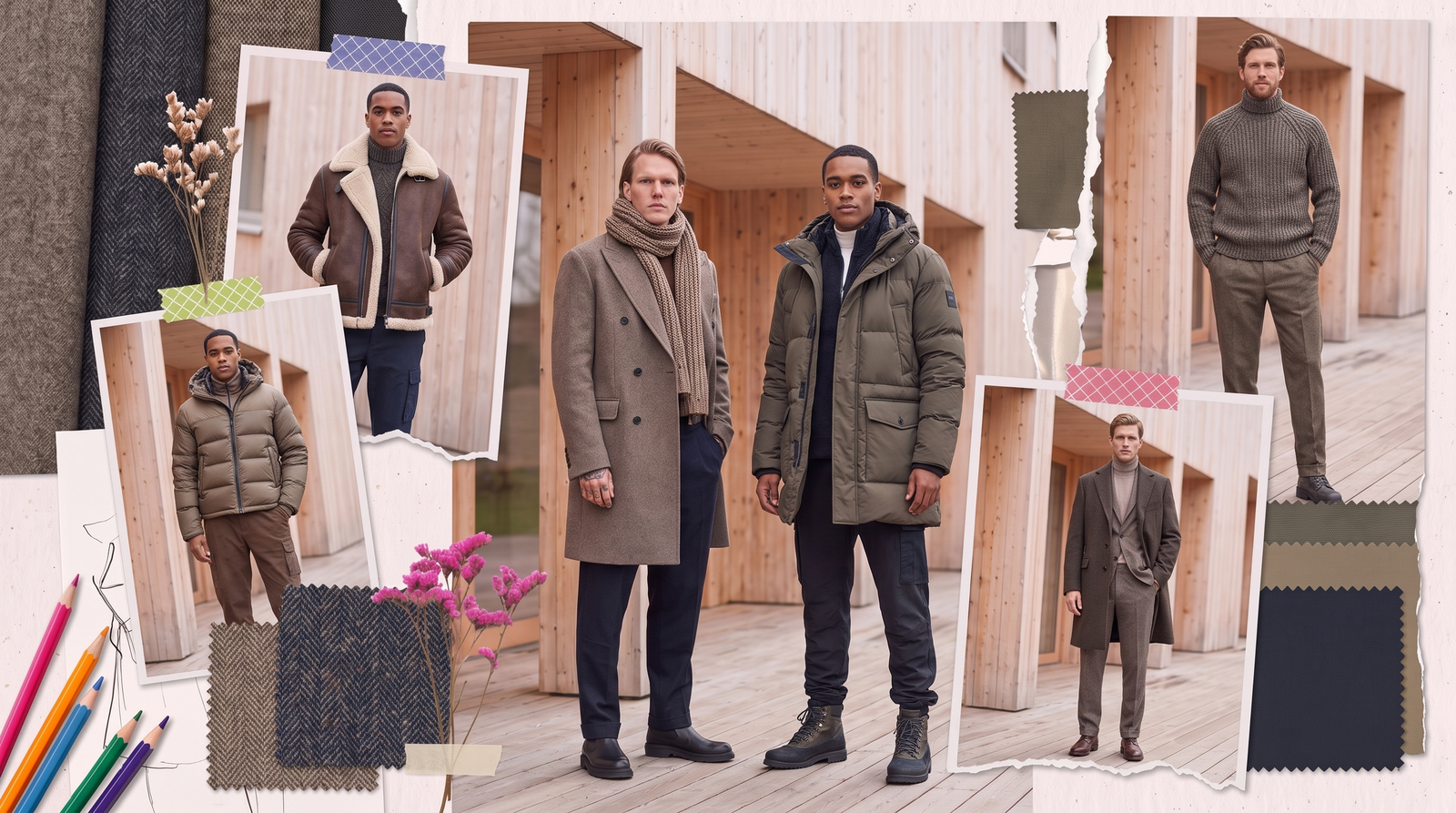
The Nordic Men Winter Coat Guide need starts with one simple idea: choose warmth for your daily life, not just the lowest number on a weather app. Four temperature levels will shape this article, from refined urban wool to technical protection for severe cold.
At The Garbstore, Carin Nakanishi calls outerwear the piece that defines an entire seasonal look. That view makes sense. A well-cut overcoat can sharpen a commute, while a compact down layer suits travel, trails, and changing weather.

This guide compares premium and affordable brands, including Fjällräven, Halti, Didriksons, Columbia, and Jack Wolfskin. The Fjällräven Expedition Down Lite Jacket suits active days, while the *Jack Wolfskin Frozen Palace* uses FP 700 down and packs small. Columbia also brings strong value across many cold-weather needs.
The warmest option is not always the most useful. Your activity, commute, travel plans, and local climate should shape the final choice.
TABLE OF CONTENTS
Table of Contents
How to Choose a Winter Coat by Temperature and Weather
Start with local temperatures, wind, rain, and daily activity. An unlined trench or wool overcoat suits mild city travel, while down adds warmth with little weight. Synthetic fill works well in damp weather and during active errands.

| Condition | Best option | Key feature |
|---|---|---|
| City commute | Wool or synthetic jacket | Clean fit |
| Wet weather | Technical shell | Sealed seams |
| Active outdoor use | Breathable down blend | Light weight |
| Still, severe cold | Heavy synthetic fill | Maximum insulation |
Didriksons uses 100–140 g/m² for warm styles and 160–250 g/m² for very warm designs. Erika Parka 3 has 180 g/m², Drew Parka 8 has 200 g/m², and Akilles 2 Parka has 250 g/m². A 200 g/m² option can keep warm during wet commuting better than a thin layer, especially when paired with jeans for a stylish silhouette.
Check hood shape, pockets, cuffs, two-way zippers, reflective details, and sweater room. IP56 limits fine dust and heavy water spray. Seam sealing and durable water-repellent finishes improve protection, but they do not create warmth. Review breathability and care needs before making your final choice of material and fabric for winter jackets and coats.
Nordic Winter Coat Guide Men: Building a Practical Outerwear Wardrobe
A useful cold-weather wardrobe works like a small team. Damien Paul highlights four core categories: a buttoned overcoat, pea coat, leather or suede shearling, and quality down layer. Together, they cover office days, wet commutes, travel, and outdoor plans.

Build the rotation with *Halti Urban Winter Coat*, *Fjällräven Greenland Winter Parka*, and *Didriksons Drew Parka 8*. Add a *Barbour Bedale Waxed Jacket* for casual rain. Barbour launched the Bedale in 1970, and its repair and rewaxing service supports long-term durability of the materials used.
Naval history adds character without limiting daily style. The duffle coat uses horn toggles, cords, and patch pockets. The pea coat pairs well with raw denim, turtlenecks, flannel trousers, or a simple shirt. A trench brings a cleaner option for mild weather, showcasing a versatile style that adapts to the day.
- Choose classic shapes and practical fabrics.
- Mix designer pieces with affordable Scandinavian brands and materials.
- Keep one packable layer for trips and changing forecasts, such as a lightweight polyester option.
Four complementary layers beat one universal choice. This approach gives each piece a clear use while keeping the wardrobe sharp, flexible, and easy to maintain.
Read more: The Ultimate Guide to Nordic Men’s Fashion: Exploring Swedish, Norwegian, Danish, and Finnish Styles
At -5°C: Refined Wool Overcoats for City Wear
A polished city layer earns its place when meetings, restaurants, and transit fill the day. Around -5°C, a structured wool overcoat offers useful warmth without the bulk of technical outerwear. Look for a fabric blend with at least 75% wool. As fabric weight rises, protection usually improves, provided the maker lists its measurement accurately.

Suitsupply Wool Overcoat, Gant Tweed Wool Coat, and Arket Wool Coat offer refined layering over a sweater or tailored jacket, perfect for a stylish look. A single-breasted cut suits formal settings, while a navy naval pea coat adds a sharper casual feel. The thick fabric of a duffle coat brings durability and warmth. For softer weather, a wool trench offers a clean profile; Thomas Burberry created the design, first linking it to military use.
Check sleeve length, shoulder shape, and space for knitwear before buying. A clean silhouette should allow movement, not cling at the chest. Leather shoes, dark denim, and simple tailoring complete the style. These versatile coats made from high-quality fabrics make daily wear feel polished without adding needless weight.
How to Judge Wool Coat Quality, Weight, and Warmth
A smart label check can prevent an expensive mistake. Choose at least 75% wool, then inspect the material, surface, and seams. Affordable options such as the Uniqlo Wool-Blend Chester Coat can work well when construction matches the price.

Use 300–350 g/m² as a medium-weight standard. Fabric above 400 g/m² feels heavier and suits colder city conditions. A listing of 520 g per linear meter equals about 350 g/m², though these measurements use different systems. Consider the color options, such as navy, when selecting the material for your coats.
- Check dense, even wool with no loose fibers.
- Look for a smooth lining and firm button attachment.
- Inspect shoulder structure, sleeve seams, and collar roll.
- Allow enough fit for a sweater beneath the overcoat.
Softness alone does not prove quality. Chemical finishing can create a silky touch without improving insulation or durability. Compare fabric density, construction, and care details before making your choice. These checks help you find strong materials, such as those blended with polyester, and lasting value in your coats.
At -10°C: Versatile Parkas for Rain, Wind, and Commuting
When slush meets strong wind, a mid-length parka gives daily commuters the coverage they need. It blends insulation, warmth, and weather protection without feeling too bulky on a crowded bus.
The Didriksons Drew Parka 8 sets a useful standard with waterproof construction and 200 g/m² insulation. For colder stops or longer walks, the Didriksons Akilles 2 Parka adds 250 g/m². Both suit variable American city weather and wet winter travel.
Affordable choices such as the Rains Fishtail Parka and Uniqlo Blocktech Utility Parka offer smart value. Technical fabric may use microfiber, Teflon treatments, nanomaterials, or micro-alveoli. Sealed seams and a durable water-repellent finish help keep rain and water outside.
- Check hood adjustment, cuffs, and two-way zippers.
- Look for interior pockets and useful hem coverage.
- Choose breathable fabric for heated buildings.
A trench can resist rain, but it needs wool or an insulated layer near -10°C. Focus on practical details, clean style, and a design that works beyond one commute.
At -15°C: Insulated Jackets for Active Outdoor Days
Climbing a trail changes how much warmth you need. Your body creates heat during steady movement, while moisture builds under heavy layers. At around -15°C, breathable insulation often works better than one bulky parka.
The Rab Microlight Alpine Jacket shows why packable design matters. Its light build suits hiking, city travel, and rest stops. You can place it in a pack, then add it when wind rises or activity slows. The The North Face 1996 Retro Nuptse Jacket offers a warmer choice for breaks, errands, and relaxed outdoor days.
Choose a roomier jacket that leaves space for a base layer and sweater. Your arms should move freely, and the fill should not feel compressed. Down works well in dry air, while synthetic material handles damp conditions with less worry.
- Carry lightweight jackets for changing effort levels.
- Use a breathable layer during uphill travel.
- Add a warmer piece at camp or during rest.
This flexible approach keeps your winter wardrobe useful. It also gives a clean style for city wear, even when a leather layer stays at home.
At -20°C: Down Jackets for Serious Cold
At -20°C, reliable insulation matters more than a sleek silhouette. Down offers excellent warmth with low weight, strong durability, and easy compression. It often outperforms synthetic fill in dry conditions, making it a smart choice for severe cold.
Rab Positron Pro Jacket and Rab Neutrino Pro Hoody use substantial down, water-repellent fabric, and close-fitting hoods. The Jack Wolfskin Frozen Palace Coat uses FP 700 down and packs into a small bundle. These designs work for hiking, travel, and city commutes.
Look for dense quilting, secure cuffs, and a protected zipper. A durable outer material helps block wind, while a hood seals in warmth. Synthetic insulation handles moisture better, but down gives a lighter, warmer result when kept dry. Premium puffers can pass $1,000, while affordable options may start near $200.
Check the Responsible Down Standard before buying. This voluntary framework supports animal welfare across the supply chain. Scandinavian brands, designer labels, and The North Face offer varied styles, from a practical overcoat to a compact jacket. Wool layers can add comfort beneath the right design.
At -25°C: Extreme-Cold Parkas and Maximum Protection
When the thermometer settles at -25°C, clothing becomes a safety system, not a style extra. A long coat or technical jacket must block wind, hold heat, and support comfort during long exposure. Choose broad coverage, strong closures, insulated cuffs, and a storm hood.
The Fjällräven Expedition Down Lite Jacket suits serious cold, while the Didriksons Marion 2 Parka provides a useful benchmark with 300 g/m² of insulation. The waterproof Didriksons Akilles 2 Parka offers 250 g/m² for wet conditions. These jackets use wind-resistant fabric and reliable materials for lasting durability.
High-fill-power down adds light warmth, but synthetic fill may perform better in damp air. An IP56 rating helps resist fine dust and heavy water spray. A water-resistant shell also helps manage rain, yet no coat can keep warm alone.
- Layer thermal underwear, wool knitwear, insulated trousers, boots, gloves, and a hat.
- Choose sealed seams, an adjustable hood, and secure closures.
- Skip a trench for prolonged exposure, even when premium coats look stylish.
Designer options offer polish, while non-designer winter pieces often deliver strong value. Build a complete winter kit around protection, fit, and dependable materials.
The Scandinavian Way to Look Good in Sub-Zero Temperatures
Great cold-weather dressing begins with balance: a clean silhouette, useful layers, and quiet confidence. Carin Nakanishi of The Garbstore calls a good coat the piece that defines an entire winter look. That idea favors smart choices over excess bulk.
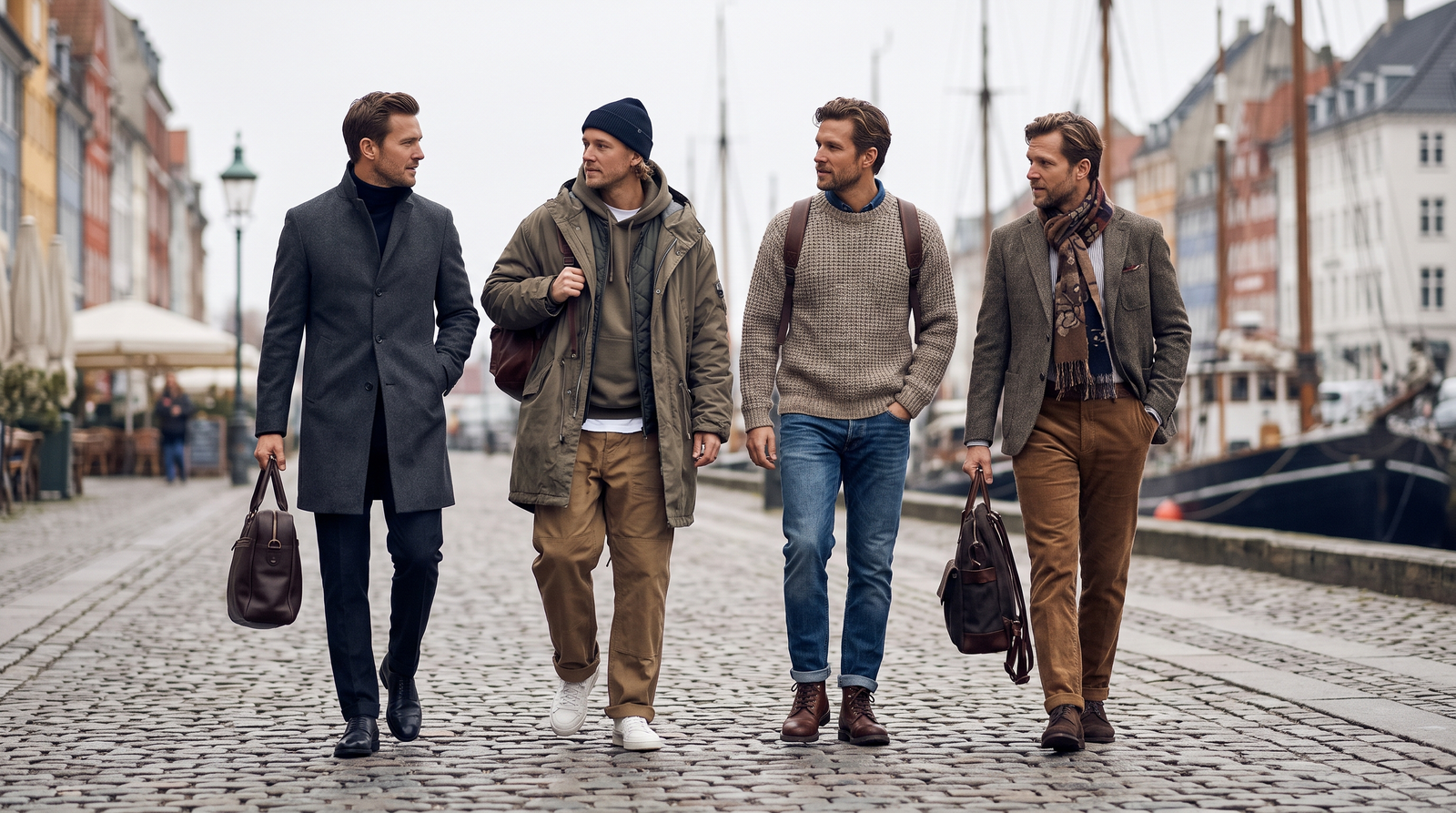
A Suitsupply Black Peacoat gives polished structure with jeans, turtlenecks, flannel trousers, shirts, or ties. A Weekday Oversized Wool Coat creates a relaxed line, while an Arket Shearling Jacket adds texture and warmth. Shearling also has flight history; World War II pilots used it for insulation.
For a flexible wardrobe, pair a wool overcoat with denim and knitwear. Choose a parka with sturdy boots for outdoor errands. A technical shell offers rain protection, not warmth, so layer insulation beneath it. Fleece traps air in small pockets and adds heat with little weight.
Proportion shapes both comfort and style. Check the fit, collar, cuffs, hem, and pocket placement. A duffle coat, leather layer, or trench can add contrast. Try a Dunhill Cashmere Top Coat, or compare accessible Mango, Uniqlo, and Marks & Spencer pieces. These brands make practical design feel refined, helping men wear texture, neutral color, and strong details with ease.
Conclusion
This guide turns four temperature bands into a clear choice for men. Near -5°C, a wool overcoat keeps city style polished. As wind and rain rise, an insulated parka offers better coverage.
Around -15°C, the packable Rab Microlight Alpine Jacket supports active movement, rest stops, and easy layering. From -20°C to -25°C, the Fjällräven Expedition Down Lite Jacket and Rab Positron Pro Jacket provide serious protection.
Before buying, check fill amount, wool percentage, fabric weight, waterproof construction, fit, cuffs, hoods, pockets, and care needs. A practical wardrobe can mix affordable, high-quality, designer, and non-designer Scandinavian and Nordic pieces. A duffle coat, leather layer, or trench adds classic style, while technical jackets handle tougher conditions. Choose winter coats that match your routine, then build each style around comfort, function, and lasting value.
One thought on “The Ultimate Nordic Men Winter Coat Guide: Stay Warm from -5°C to -25°C”