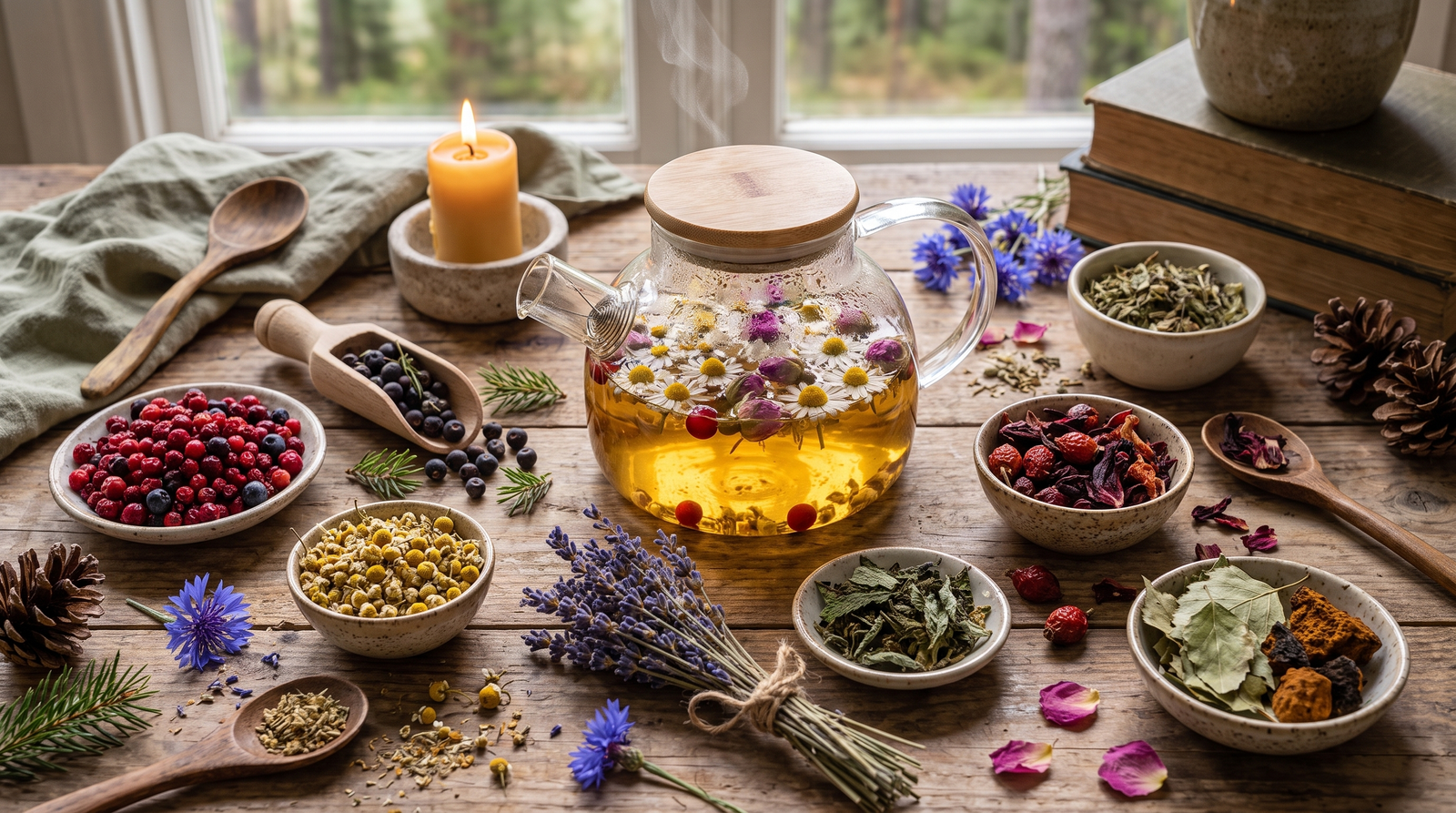
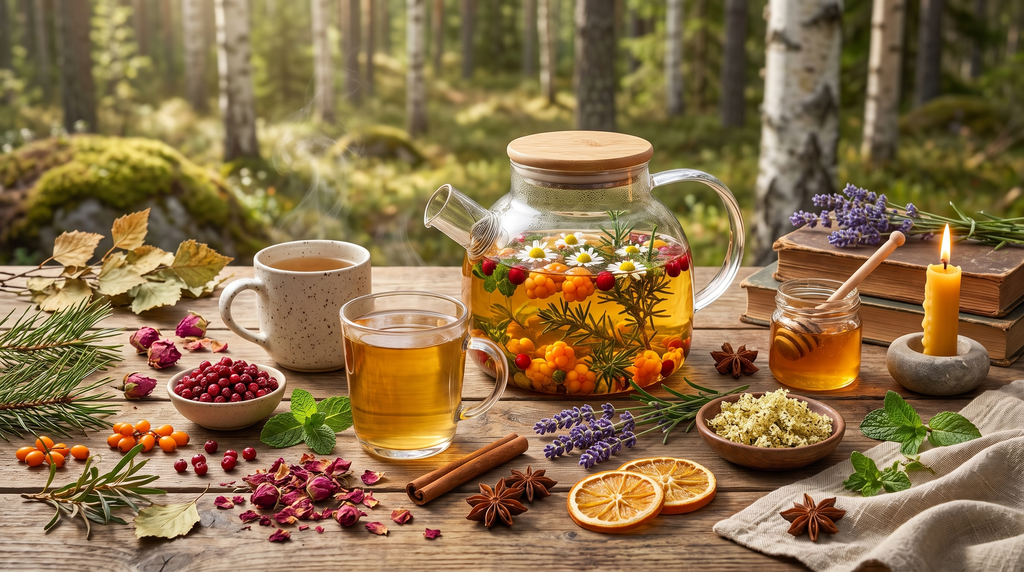
There’s something comforting about a warm cup of tea, especially when it brings to mind quiet forests, wild berries, crisp northern air, and the simple pleasure of slowing down. That’s part of the appeal of Nordic botanical tea. Inspired by plants associated with northern landscapes, these blends bring together fruity, floral, earthy, and sometimes resinous flavors that feel a little different from your everyday breakfast tea. You might find the bright fruitiness of lingonberry, the delicate character of cloudberry, or the fresh, forest-like notes of spruce tips in a blend. Others feature familiar herbs such as nettle or aromatic botanicals such as garden angelica. But what exactly makes a tea Nordic, and how do you know which ingredients are actually in your cup? The terminology can be confusing, particularly when packaging uses phrases such as “Arctic botanical” or “forest tea” without explaining the blend.
TABLE OF CONTENTS
Table of Contents
In this guide, we’ll explore seven Nordic botanical ingredients, how to choose a blend that suits your taste, and what to check before buying. Whether you’re curious about Scandinavian tea or simply looking for something new to sip on a quiet afternoon, here’s where to begin.
What Is Nordic Botanical Tea?
Nordic botanical tea is a handy term for tea blends and herbal infusions that feature ingredients from Nordic countries and northern landscapes. These might include berries, leaves, flowers, herbs, or parts of trees. Some blends mix botanicals with black or green tea, while others are purely herbal. The distinction matters because “tea” is often used loosely to describe both. Technically, traditional tea comes from the Camellia sinensis plant, which produces black, green, white, and oolong teas through different processing methods. Herbal infusions, however, are made by steeping other plants in hot water. A Nordic-inspired blend could be black tea with lingonberry flavor or a caffeine-free mix of nettle, flowers, and berries. Neither style is inherently more authentic—it all depends on the ingredients and the drink the maker wants to create.
Arctic botanical tea. In this context, it works best as an editorial description for blends inspired by northern plants and landscapes, not as the name of a standardized tea category. There isn’t one official recipe that every Nordic botanical blend must follow. Brands can choose different ingredients, flavor profiles, and bases, so reading the label is more useful than relying on the name alone. For a starting point, Nordqvist has published an introduction to Scandinavian tea ingredients that discusses plants such as cloudberry leaves, nettle, garden angelica, pine needles, spruce tips, heather, and lingonberry.
You can explore its guide here: Scandinavian Teas: An Insider’s Guide. As with any brand-published article, treat ingredient descriptions as a starting point for learning about the products, not as clinical evidence of health effects.
7 Nordic Botanical Ingredients to Know
One of the most interesting things about Nordic-inspired tea is the variety of plant ingredients that can appear in a blend. Some contribute a fruity aroma, others add earthy or herbal notes, and a few offer the distinctive fragrance people associate with forests. The important detail is that the plant part matters. A blend containing berry flavoring isn’t necessarily made with the fruit itself, and a product featuring a plant’s leaves is not interchangeable with one made from its berries. Here’s what to look for when exploring Nordic tea ingredients.
1. Cloudberry: A Delicate Northern Berry
Cloudberries are golden-orange berries found in northern and subarctic regions, prized in Nordic cuisine for their delicate, fruity taste. In tea blends, they may appear as dried fruit, fruit preparations, extracts, or flavorings that mimic the berry’s profile. These forms vary, so it’s worth checking what the manufacturer lists. Some botanical sources mention cloudberry leaves, which are a different part of the plant and shouldn’t be assumed to share the same culinary uses or safety considerations as the fruit. If you’re buying cloudberry tea for its berry flavor, look for labels that specify the fruit itself. If the label simply says “cloudberry flavor,” the taste might come mainly from added flavoring rather than a significant amount of real fruit.
What to look for: A clearly named ingredient list that distinguishes cloudberry fruit, leaves, extracts, and flavorings.
Flavor expectation: Depending on the recipe, a blend may taste gently fruity, sweet-smelling, or tart, but the final flavor depends on the other ingredients and the base tea.
2. Lingonberry: Bright, Tart, and Familiar in Nordic Food Culture
Lingonberries are small red berries widely associated with Nordic cuisine. Their tart flavor makes them a natural inspiration for fruit-forward teas, particularly blends that pair berries with apple, citrus, or warming spices. In commercial products, lingonberry may appear as dried berries, juice or fruit components, extracts, or flavoring. Lingonberry leaves are another distinct ingredient and should not be confused with the fruit. This difference is especially important when shopping online because a product’s name may emphasize the berry even when the ingredient list tells a more specific story. If you prefer fruity infusions, a lingonberry-inspired blend may be a good place to begin. Look for a blend that clearly states whether it contains actual fruit, flavoring, or both.
What to look for: Whether the product lists lingonberry fruit, leaves, extract, or flavoring, and whether it includes other ingredients such as hibiscus, apple, or rosehip.
Flavor expectation: Berry-inspired blends may be tart, tangy, sweet, or pleasantly sharp, depending on the recipe. A blend containing hibiscus, for example, may have a noticeably different acidity from one based on black tea.
3. Nettle: An Earthy Herbal Ingredient
Nettle is a familiar herb in many European food traditions, including some Nordic-inspired botanical blends. The leaves are commonly associated with a green, earthy, herbaceous character. In a tea infusion, nettle is often used as part of a broader herbal mixture rather than as a fruit-like flavor. If you’re used to delicate black tea or sweet berry infusions, a nettle blend may taste more vegetal and less immediately sweet. It can be interesting on its own or balanced with other herbs and botanicals. However, don’t assume that an ingredient is safe for everyone simply because it’s a plant used in traditional foods or herbal preparations. Herbal products can have side effects and may interact with medicines or be unsuitable for certain health conditions. If you’re pregnant, breastfeeding, managing a medical condition, or taking prescription medication, ask a qualified healthcare professional whether a particular herbal product is appropriate for you.
What to look for: The plant part used, the full list of additional herbs, and any product-specific safety guidance.
Flavor expectation: Often described as earthy, green, or grassy, although the overall taste depends on the blend and brewing method.
Read more: Savory Scandi Pumpkin Muffins with Cottage Cheese & Rye
4. Garden Angelica: An Aromatic Botanical
Garden angelica, commonly known as Angelica archangelica, is a plant with a long history of culinary and traditional herbal use in parts of northern Europe. Different parts of the plant have been used in different contexts, so the word “angelica” on a label doesn’t tell you everything you need to know. In a commercial botanical blend, angelica may contribute an aromatic, herbal character that complements other plants. Its flavor can be difficult to describe in isolation because it is often combined with other ingredients. The main shopping consideration is clarity: the label should identify the ingredient, and the product should come from a manufacturer that provides sensible information about preparation and use. It’s best not to experiment with homemade angelica preparations based on general descriptions found online. Plant identification, the part used, and the method of preparation can affect safety.
What to look for: The botanical name where available, the plant part used, and clear preparation instructions from the manufacturer.
Flavor expectation: Aromatic and herbal, with the exact character depending on the recipe. If you’re new to botanical blends, try angelica as part of a clearly labeled commercial tea rather than seeking out the plant for independent preparation.
5. Pine Needles: A Distinctive Forest-Inspired Note
Pine needles may bring to mind the scent of evergreen trees after rain, which explains their appeal in forest-inspired food and drink concepts. Certain commercial botanical products feature pine-derived ingredients for their characteristic aromatic profile. However, the phrase “pine needle tea” needs particular care because not every evergreen species is suitable for consumption. Similar-looking trees can differ significantly, and some, including yew, are highly toxic. The common name alone isn’t enough to establish that a plant is safe. For this reason, pine-inspired tea is best approached as a properly identified, commercially prepared product from a reputable manufacturer that specifies its ingredients. Don’t assume that needles from a tree in your garden or a nearby forest are suitable for steeping in hot water.
What to look for: A clearly identified plant species or ingredient, transparent sourcing, and explicit preparation guidance. Avoid products with vague ingredient descriptions that leave you guessing which plant has been used.
Flavor expectation: Depending on the specific botanical and formulation, the aroma may be resinous, woody, or reminiscent of evergreen foliage. The actual taste will vary, so don’t expect every forest-inspired blend to taste the same.
6. Spruce Tips: Fresh, Green, and Forest-Inspired
Spruce tips are the young growth at the ends of spruce branches. They appear in some Nordic-inspired culinary products and are associated with a fresh, green, aromatic character. In a commercial infusion, spruce-derived ingredients may contribute a distinctive forest note, especially when paired with other herbs or mild fruit flavors. Still, “spruce” should be identified clearly rather than treated as a general term for any evergreen. Species identification and preparation matter, and a spruce-inspired label doesn’t mean the product is appropriate for everyone.
If you’re interested in tasting this ingredient, look for a ready-made blend from a manufacturer that identifies its contents and provides directions. Foraged ingredients carry extra risks because similar-looking plants can be misidentified and local contamination or harvesting restrictions may apply.
What to look for: Clear ingredient identification, a reputable producer, and instructions specific to the product.
Flavor expectation: Some blends may have a fresh, green, or resinous character. If that sounds intense, look for a blend that combines forest botanicals with gentler ingredients rather than choosing a product built around a single strong flavor.
Read more: Spiced Græskarkage: The Ultimate Danish Pumpkin Cake for Fika
7. Heather Flowers: A Floral Alternative
Heather is a flowering plant associated with heathlands and other landscapes in parts of northern Europe. Heather flowers may appear in herbal preparations and botanical blends, where they can contribute a floral note and add visual interest to the dry mixture. Compared with fruit-forward ingredients such as lingonberry, heather offers a different direction for the cup. It’s worth remembering that attractive flowers in a tea blend don’t automatically make a drink medicinal, relaxing, or beneficial for a specific health condition. Those are separate claims that require appropriate evidence. If you’re drawn to floral teas, check whether heather is actually listed as an ingredient or simply appears in the product’s description or imagery.
What to look for: The listed plant ingredient, any additional flowers or herbs, and preparation instructions.
Flavor expectation: A floral or gently herbal profile may be present, but the final taste depends on the blend. If you prefer mild flavors, look for a balanced recipe rather than assuming that a tea with flowers will always taste delicate.
How to Choose a Nordic Botanical Tea You’ll Actually Enjoy
With so many unfamiliar ingredients, it’s easy to pick a tea blend because the packaging is pretty or the name sounds intriguing. But the best tea is the one you truly enjoy drinking. Start with a flavor you already like, then explore from there. If you usually drink black tea, try a Nordic-inspired blend with berry notes. If fruity herbal infusions are your thing, look for a caffeine-free option with a clear list of fruits and botanicals. If you prefer fresh, earthy flavors, a herbal blend with nettle might be more appealing than something sweet and berry-based. Next, think about when you’ll be drinking it.
A morning cup may pair best with a black or green tea base, while an evening brew might work better as a caffeine-free infusion—provided the ingredients suit you. Don’t assume a blend is caffeine-free just because it has herbs or berries; some mixes combine botanicals with black or green tea, which naturally contain caffeine. Always read the full ingredient list, and look for specific names rather than vague terms like “forest,” “wild,” “Arctic,” or “Nordic.” These can set a mood but don’t reveal what’s actually inside. If you care about real fruit, check whether the label lists actual fruit, an extract, or just flavoring. And if you have dietary restrictions or sensitivities, review all ingredients and allergen info.
Finally, buy a small package before committing to a large tin. Botanical flavors can be bold, and a scent that sounds wonderful might taste stronger or earthier than expected. A smaller pack helps you figure out what you like without ending up with tea you won’t drink.
Read more: The Lux-Loading Routine: Scandinavian Lighting for the 3 PM Energy Crash Fix
How to Brew Nordic Botanical Tea
There’s no single universal method for brewing Nordic botanical tea, as the best approach depends on the ingredients and base. Black tea blends, green tea blends, and caffeine-free herbal infusions each require different water temperatures and steeping times. It’s best to start with the manufacturer’s instructions as a baseline—follow any specific guidelines for water temperature, quantity, or steeping time before experimenting. Over-steeping can make some teas bitter or overly strong, while water that’s too cool may result in a less flavorful cup. For herbal infusions, always check the product details rather than assuming all botanicals should be prepared the same way—plant material, cut size, formulation, and intended use all play a role.
When comparing blends, use the same cup size and follow each product’s recommended method to get an accurate sense of the ingredients, rather than comparing a perfectly brewed cup to one steeped too long. Focus on aroma first, then taste—is it fruity, floral, grassy, or forest-like? Notice how the flavor changes as it cools, and whether the finish is sweet, tart, earthy, or bitter. These observations should reflect your actual experience, so avoid making up tasting notes for teas you haven’t brewed yourself. You can also try different serving temperatures; some blends shine hot, while fruit-forward infusions can be great chilled. If you want to add honey, lemon, or other extras, taste the tea plain first to appreciate its original flavor, then add small amounts to see if they enhance it. Keep it simple—a bit of curiosity and attention can turn exploring Nordic botanical tea into a pleasant daily ritual.
What to Check Before Buying Nordic Botanical Tea
Beautiful packaging and a compelling story can make a tea feel special, but the information on the label is what helps you decide whether it’s right for you.
First, check ingredient transparency. A good product description should explain whether the blend contains black or green tea, herbs, berries, flowers, extracts, or added flavorings. When botanical ingredients are unfamiliar, look for their names and, where useful, their botanical identification. This is particularly important for products featuring evergreen-derived ingredients.
Second, consider sourcing information. Does the brand explain where its ingredients come from, or does it simply use broad descriptions such as “wild Nordic botanicals”? A specific sourcing statement is more informative than an evocative phrase, although details can vary by product and ingredient.
Third, examine certifications carefully. If a product claims to be organic, look for the relevant certification and check which ingredients or stages of production it covers. If the company uses sustainability language, see whether it provides a named standard, certification, or concrete sourcing policy. Words such as “natural,” “clean,” and “eco-friendly” don’t automatically demonstrate a particular environmental standard.
Fourth, check caffeine information. If you avoid caffeine, make sure the blend doesn’t contain black tea, green tea, or another caffeine-containing ingredient. When the label is unclear, ask the manufacturer instead of guessing.
Fifth, consider safety and preparation guidance. Don’t treat a botanical tea as a medicine, and don’t assume that traditional use proves a health benefit. If you take medication, have a health condition, or are pregnant or breastfeeding, check with a qualified healthcare professional before trying unfamiliar herbal ingredients.
Finally, confirm availability and shipping. A Nordic tea brand may sell primarily within Europe, and some products may not be available or economical to ship to your country. Review the shipping region, delivery costs, import restrictions where relevant, and the retailer’s return policy before placing an order. These details may not be as exciting as the flavor story, but they help you make a more informed purchase.
Can You Make Nordic Botanical Tea Part of Your Daily Routine?
Absolutely, if you enjoy the taste and choose a product that’s appropriate for you. Tea can be a simple way to pause between tasks, accompany a book, or add a little variety to your usual drinks. You might enjoy a berry-inspired blend in the afternoon, a familiar black tea with Nordic-style fruit notes in the morning, or a caffeine-free infusion when you want to avoid caffeine later in the day. The important thing is to choose according to flavor and practical needs rather than promises on the packaging. A tea marketed as a wellness blend isn’t automatically proven to improve sleep, digestion, immunity, or energy. Botanical ingredients vary, and claims about specific health effects require reliable evidence. Treat the drink as a beverage first. If you enjoy trying new flavors, keep a small tasting notebook with the blend’s name, ingredients, brewing instructions, and your impressions. Note whether you liked it plain, whether it worked better hot or chilled, and whether you’d buy it again. This makes it easier to identify your favorites and avoid repeating purchases you didn’t enjoy. You don’t need a cupboard full of rare ingredients, either. Two or three blends with different flavor profiles can offer plenty of variety.
Frequently Asked Questions
Is Nordic botanical tea always caffeine-free?
No. Nordic botanical tea is a descriptive term, not a fixed recipe. A blend may contain black or green tea, which naturally contains caffeine, or it may be an herbal infusion made without traditional tea leaves. Check the ingredient list and the manufacturer’s caffeine information instead of relying on the words “Nordic,” “botanical,” or “herbal” on the front of the package.
Does cloudberry tea mean it contains cloudberry fruit?
Not necessarily. A product described as cloudberry tea may contain the fruit, cloudberry leaves, an extract, added flavoring, or a combination of ingredients. These are different things. If you specifically want the fruit, check the complete ingredient list to see whether cloudberry fruit is named rather than assuming the product’s title tells you everything.
Can Nordic botanical tea be served iced?
Some blends can be enjoyed chilled, particularly those with fruity or floral flavor profiles. However, check the product’s brewing instructions and prepare it according to the manufacturer’s guidance. You can brew a suitable blend as directed, allow it to cool, and refrigerate it promptly in a clean, covered container. Keep it refrigerated and consume it within a reasonable period rather than leaving brewed tea at room temperature for extended periods.
What does Nordic botanical tea taste like?
There’s no single flavor. Berry-inspired blends may be tart or fruity, nettle-based infusions may taste earthy or green, floral blends may have a delicate aromatic character, and forest-inspired products may feature resinous or woody notes. The base tea, ingredient proportions, and brewing method all influence the final cup.
Is Arctic botanical tea an official category?
In this article, “Arctic botanical” is used as a descriptive theme for blends inspired by northern landscapes and plants. It isn’t a standardized tea classification with one required ingredient list or preparation method. Always check the actual ingredients rather than assuming a product follows a universal recipe.
Are Nordic botanical teas good for your health?
Their ingredients and nutritional characteristics vary, so it’s best not to make broad health claims about the category. Traditional use or marketing language isn’t the same as clinical evidence. Enjoy these teas for their flavors and as part of your usual beverage choices, and ask a qualified healthcare professional about unfamiliar botanicals if you have a medical condition, take medication, or are pregnant or breastfeeding.
Where can I buy Nordic botanical tea?
Start with specialist tea retailers and established brands that provide clear ingredient lists and product instructions. You can also explore Nordic tea makers, including Nordqvist, as a starting point for learning about Scandinavian-inspired blends. Before ordering, confirm that the product is available in your location and check shipping fees, ingredient details, caffeine information, and the seller’s policies.
A Little Taste of the Nordic Landscape in Every Cup
Nordic botanical tea offers an inviting way to explore the flavors associated with northern landscapes, from the tart character of lingonberry to the aromatic notes of forest-inspired botanicals. The appeal isn’t that every blend is rare or that every ingredient promises a particular health benefit. It’s the variety: familiar tea bases, fruity ingredients, earthy herbs, delicate flowers, and distinctive aromas that give each blend its own personality. Start with a flavor you already enjoy, then try something new when you’re ready. Read the label, pay attention to the plant parts used, and choose products from manufacturers that provide clear preparation and safety information. If you enjoy the ritual, take time to notice the aroma, taste the tea without additions first, and experiment with serving it hot or chilled when the product is suitable for both. Most importantly, don’t let unfamiliar terminology make the experience feel complicated. “Nordic botanical tea” can be a helpful starting point, but the ingredients and the flavor in your cup are what really matter. Find a blend you love, make yourself a cup, and enjoy a small moment of calm—one sip at a time.