What If You Met the Morning Before the World Got Loud?
Picture stepping outside while the neighborhood is still quiet. The air feels fresh, the light is soft, and somewhere nearby, a bird begins to sing. No notifications are flashing. Nobody needs an answer from you just yet. For a few minutes, you can simply be there.
It’s a small moment, but it offers a welcome alternative to the way many mornings begin. Instead of reaching for a phone, checking the news, and mentally racing through a long list of responsibilities, you get to ease into the day at your own pace.
This is the feeling behind gökotta, a Swedish tradition associated with rising early to go outdoors and listen to birdsong. The practice is particularly connected with spring and early summer, when mornings grow lighter and bird activity becomes more noticeable.
TABLE OF CONTENTS
Table of Contents
Gökotta isn’t a strict daily routine followed by everyone in Sweden, nor is it a rule that says you must wake before sunrise to live well. It’s a cultural tradition with a lovely central idea: make room to experience the natural world before the demands of the day take over and that idea can fit into modern life surprisingly well.
You don’t need to move to the countryside, buy special outdoor gear, or suddenly become someone who leaps out of bed at 5 a.m. You can borrow the spirit of gökotta by creating a little space for quiet, noticing the world around you, and beginning your morning with less hurry.
Here’s what the tradition means, why it appeals to modern life, and how you can adapt it to your schedule, sleep needs, and local seasons.
What Does Gökotta Mean?
Gökotta is a Swedish word associated with getting up early to go outside and listen to birds singing. The tradition is especially linked with spring and early summer, when the mornings are brighter and the natural world feels full of activity.
The word is commonly explained through its connection to the cuckoo, a bird whose call is strongly associated with spring in Sweden. The tradition itself, however, is broader than spotting one particular bird. It’s about going out early to experience birdsong and the quiet atmosphere of the morning.
Unlike a highly structured wellness routine, gökotta doesn’t need a complicated checklist. There’s no required workout, meditation sequence, or productivity exercise. The experience can be as simple as walking outside and paying attention to what you hear.
The beauty of noticing what’s already there
Much of modern life encourages us to focus on what comes next. We check messages, plan appointments, read headlines, and think about the tasks waiting for us.
Gökotta offers a different starting point.
Instead of immediately looking for information, you pay attention to your surroundings. You might notice birds calling from a nearby tree, leaves moving in the breeze, or the way the morning light changes the color of familiar buildings.
You don’t need to identify every sound or turn the experience into a nature lesson. In fact, part of the appeal is that there’s nothing you need to achieve.
You’re simply making time to observe.
Is gökotta the same as a Nordic morning routine?
Not exactly. The Nordic countries—Denmark, Finland, Iceland, Norway, and Sweden—have diverse cultures and traditions. Gökotta is specifically associated with Sweden, so it’s more accurate to describe it as a Swedish tradition than as a universal Nordic habit.
The phrase “Nordic morning routine” can still describe a modern lifestyle article inspired by the practice, but it shouldn’t suggest that all Nordic people follow the same schedule or begin every day outdoors.
Think of gökotta as the inspiration for a quieter morning, not a cultural rulebook.
Why Gökotta Appeals to Modern Life
For many people, the morning begins before they’ve had a chance to feel fully awake. An alarm goes off. A phone comes within reach. Messages and news compete for attention, and thoughts quickly turn to work, family responsibilities, errands, and everything else that needs doing.
Before you’ve even left the bedroom, the day can feel as though it’s already running ahead of you. A gökotta-inspired morning offers a gentler transition.
1. It creates a pause before notifications
Phones are useful, but they can also pull your attention in several directions at once. One message can lead to an email, then a news story, then a quick scroll that lasts longer than expected.
Leaving your phone alone for a few minutes gives you a chance to start the day without immediately responding to other people’s priorities.
You don’t have to avoid technology for the entire morning. Simply choosing not to check it first can make the opening moments of your day feel more deliberate.
2. It invites you to pay attention to your surroundings
When you move through the morning on autopilot, familiar places can become little more than backgrounds. You walk the same street without noticing the trees, sit near a window without looking outside, or miss the sounds that change with the seasons.
Taking a few minutes to listen can make an ordinary morning feel more vivid.
You might notice a bird you’ve heard before but never really paid attention to, the first signs of new growth, or the difference between a cool spring morning and a warm summer one.
These observations don’t need to be profound. Sometimes, noticing something small is enough to make a moment feel less rushed.
3. It gives the day a softer beginning
Not every morning can be peaceful. Some days involve early meetings, children who need help getting ready, public transport to catch, or unexpected problems.
Gökotta isn’t a guarantee that you’ll feel calm all day, and it shouldn’t be presented as a cure for stress or a shortcut to better productivity.
Instead, think of it as an opportunity to create a small transition between sleep and responsibility.
A few quiet minutes may feel more manageable than trying to redesign your entire morning. And because the practice doesn’t demand a particular result, you can enjoy it without turning it into another performance goal.
Read more: 4 Daily Routine Habits to Survive Nordic Longer Winter
How to Create a Gökotta-Inspired Morning Ritual
The easiest way to try gökotta is to keep it simple. You don’t need a strict schedule or a long list of habits. Start with one quiet moment and build from there if it feels good.
Step 1: Wake at a time that works for you
You don’t need to set an alarm for 5 a.m. to appreciate the morning. Choose a time that respects your sleep needs and everyday responsibilities. If you already wake early, you might have an easy opportunity to step outside. If you usually start later, you can experiment on a free day or choose another quiet moment.
Getting enough sleep matters more than forcing yourself into an early schedule simply because it looks appealing online. The aim is to experience a little stillness—not to win a competition against your alarm clock.
Step 2: Resist the urge to check your phone immediately
If possible, give yourself a few minutes before opening messages, social media, or the news.
You can leave your phone charging nearby, turn off nonessential notifications, or simply decide that you’ll check it after your quiet moment.
If you need your phone for safety, accessibility, family responsibilities, or emergency communication, keep it available. The idea isn’t to follow a rigid digital rule. It’s to give yourself a little more choice over where your attention goes.
Step 3: Find a place where you can listen
You don’t need a forest or a secluded garden. A balcony, porch, courtyard, nearby park, or open window can be enough.
If you live in a city, you may still hear birds among the traffic and everyday sounds. If outdoor access is difficult, sitting near a window and listening to the world outside is a reasonable adaptation.
Choose a place that feels safe and comfortable. You can stand, sit, walk slowly, or simply look outside while you wake up.
Step 4: Listen without needing to identify every bird
This is where the spirit of gökotta comes in.
For a few minutes, pay attention to the sounds around you. Can you hear one bird or several? Are the calls close by or farther away? Is there wind moving through the trees? Does the neighborhood sound different from how it does later in the day?
You don’t need to know the names of the birds. You don’t need to record what you hear or take a photo to prove you were there.
If your mind wanders to your schedule, gently return your attention to the sounds around you. There’s no need to judge yourself for getting distracted.
Step 5: Enjoy your coffee or tea afterward
A warm drink can be a lovely way to continue a slow morning. Make coffee, prepare tea, or enjoy whatever you normally drink.
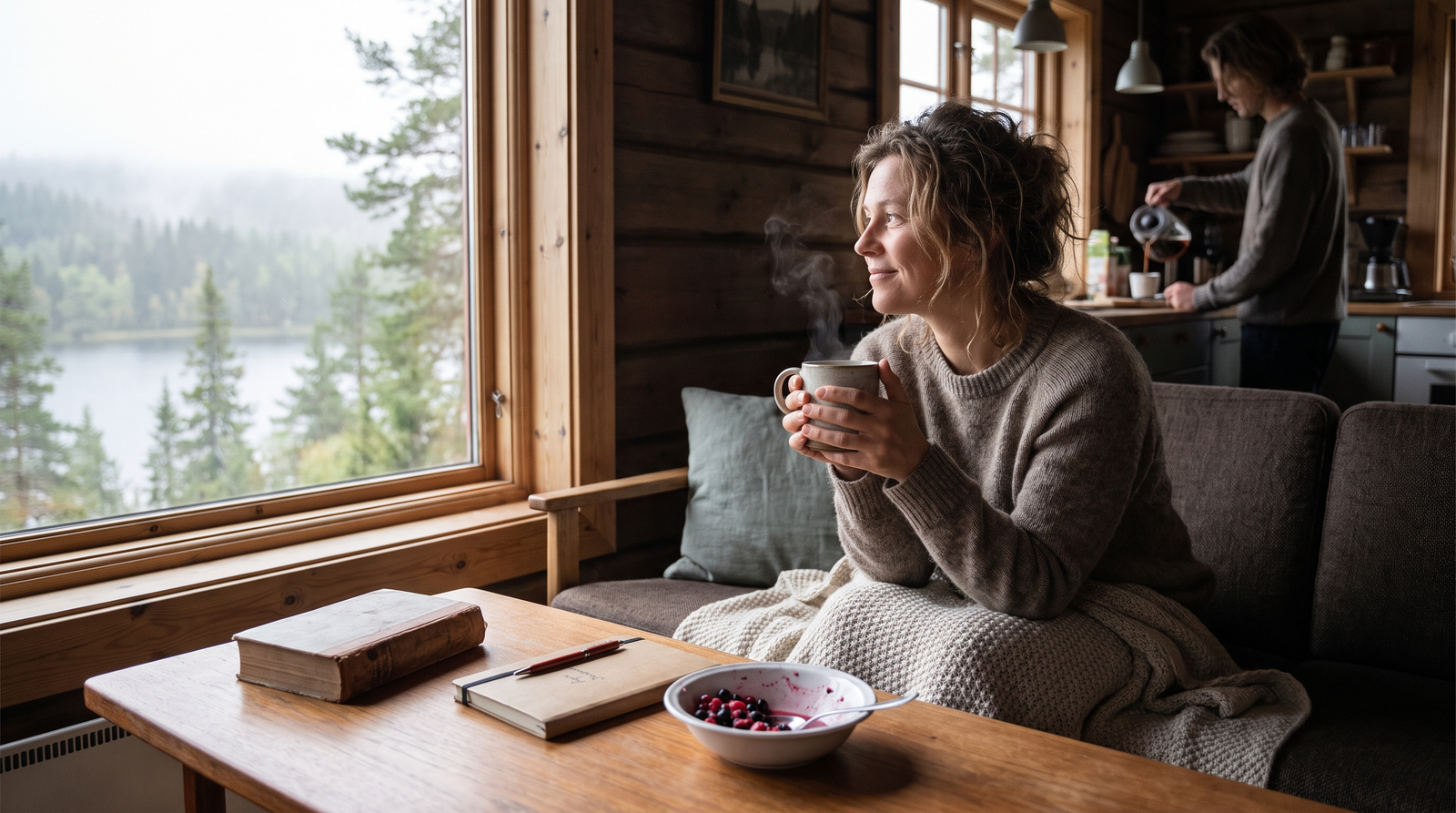
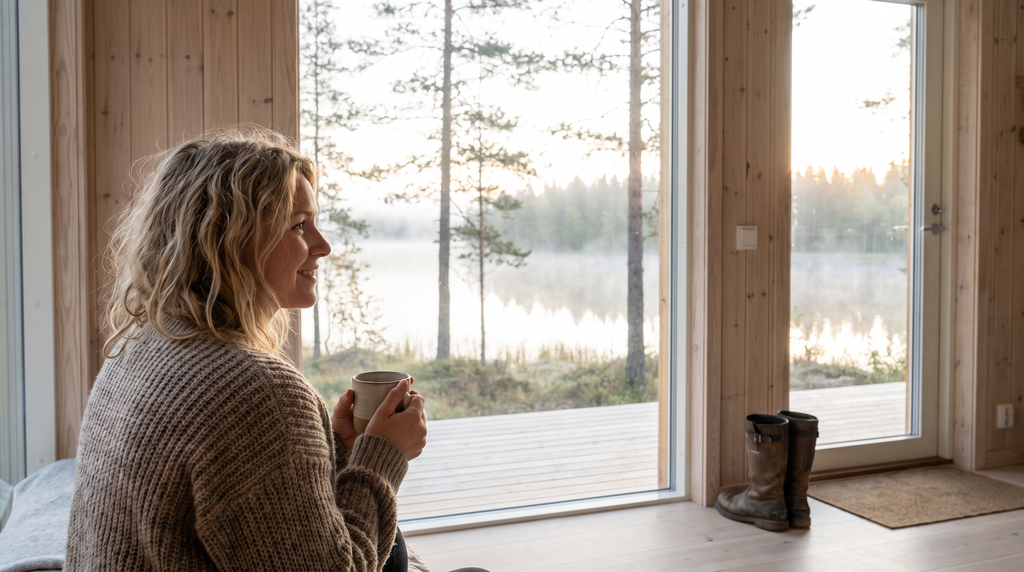
Try having it without scrolling through your phone. Sit by a window, take it outside if conditions allow, or enjoy a few quiet moments in your kitchen.
You don’t need a special mug or an elaborate morning setup. The point is to enjoy the moment, not to buy your way into a lifestyle.
Step 6: Choose one gentle intention for the day
Once you’ve had a little time to yourself, consider what would make the day feel manageable.
You might decide to focus on one important task, take a proper lunch break, be patient during a busy morning, or make time to speak with someone you care about.
Keep the intention realistic. You’re not planning your entire life before breakfast; you’re simply choosing one thing to carry into the day.
What If You’re Not a Morning Person?
Let’s be honest: not everyone enjoys waking up early. Some people feel naturally alert in the morning, while others need more time to feel awake. Work schedules, caring responsibilities, health needs, and sleep patterns all affect what’s realistic.
Fortunately, you don’t have to become a morning person to enjoy the spirit of gökotta.
Try it once a week
Instead of committing to a new routine every day, choose one morning when you have a little flexibility.
That might be a weekend, a day off, or a morning when your schedule starts later. Treat it as an experiment rather than a promise you must keep indefinitely.
If you enjoy it, you can repeat it. If it doesn’t fit your life, there’s no need to force it.
Find the first quiet moment available
The spirit of the practice isn’t limited to a specific time on the clock.
Perhaps your mornings are busy with children, commuting, or preparing for work. You might find a few minutes after dropping someone off, during a midmorning break, or when you return from an early errand.
You can adapt the idea by listening to the outdoor sounds around you and allowing yourself a moment of observation.
That isn’t necessarily traditional gökotta in its original sense, but it can still be a meaningful way to borrow its spirit.
Adapt the ritual in winter
Spring and early summer are particularly associated with gökotta, but not every season offers the same conditions.
In winter, mornings may be dark, cold, icy, or simply unpleasant for spending time outdoors. You don’t need to force an early outdoor ritual to stay true to the idea.
Instead, you could:
- Sit near a bright window after waking.
- Take a slow walk once daylight arrives.
- Notice the winter sky or the quiet of your neighborhood.
- Enjoy a warm drink without immediately checking your phone.
- Step outside briefly when the weather and conditions feel safe.
The goal is to make space for a slower start, not to sacrifice comfort or sleep.
Make Your Gökotta-Inspired Routine Seasonal
One of the most appealing aspects of a nature-focused morning is that it changes with the world around you. Rather than following an identical routine every day, you can let the season shape what you notice.
Spring: Listen for birdsong and new growth
Spring is a natural time to explore the inspiration behind gökotta.
Listen for birds in the early morning, look for fresh leaves, and notice how the light changes as the season progresses. You might choose a familiar walking route and pay attention to small changes each time you visit.
There’s no need to turn it into a detailed nature project. Let curiosity guide you.
Summer: Enjoy the quiet before the heat
In warmer climates, summer mornings can be especially pleasant before temperatures rise and outdoor spaces become busier.
Take your coffee outside, walk through a nearby park, or sit in the shade for a few minutes. If your area gets very hot, choose a safe time and location, bring water when appropriate, and avoid exposing yourself to dangerous heat just to maintain a routine.
In cooler climates, you may enjoy the long daylight hours and the sounds of the neighborhood waking up.
Fall: Notice the changing light
Autumn offers a different kind of morning atmosphere. The air may feel cooler, leaves may change color, and familiar places can look different from one week to the next.
Try a short walk, listen for the sounds that remain, or spend a few minutes noticing the colors and textures around you.
You don’t need to make the experience sentimental or profound. Sometimes, a simple awareness of the changing season is enough.
Winter: Choose warmth, daylight, and quiet
Winter doesn’t always lend itself to an early outdoor ritual. Depending on where you live, mornings may be dark, wet, icy, or bitterly cold.
Adapt accordingly. Sit near a window, enjoy a quiet drink, or wait until there’s enough daylight for a comfortable walk. If going outdoors feels unsafe or impractical, staying inside is perfectly reasonable.
The seasonal version of this practice should work with your environment—not against it.
A Simple 15-Minute Gökotta-Inspired Morning Routine
If you like having a little structure, here’s a short routine you can try without turning your morning into a complicated checklist.
Minutes 1–3: Wake up and drink some water.
Give yourself a moment to become alert. Open the curtains if you can, get comfortable, and avoid rushing straight into your phone.
Minutes 4–8: Listen to the world around you.
Step outside, sit on a balcony, or find a spot near an open window if conditions allow. Listen for birds and other outdoor sounds. Notice the light, air, and atmosphere without trying to accomplish anything.
Minutes 9–12: Make coffee or tea and enjoy it without scrolling.
Prepare your usual drink and take a few minutes to enjoy it. You can sit outside or return indoors to a comfortable place.
Minutes 13–15: Choose one priority and one thing to look forward to.
Write down one task that matters today. Then identify one small thing you’re looking forward to, whether it’s lunch with a friend, a favorite meal, a walk, or a quiet evening.
That’s it. No elaborate planner, complicated wellness routine, or early-morning workout required.
If 15 minutes is too much, shorten the routine. If you have only three minutes, use those three minutes. The schedule is a guide, not a rule.
Common Mistakes to Avoid
It’s easy for a gentle practice to become another way to judge yourself. A few simple reminders can help keep your gökotta-inspired routine enjoyable.
Turning it into an early-rising competition
Waking up earlier isn’t automatically better. If an early alarm cuts into the sleep you need, adjust the timing or try the practice less often.
Treating every morning as a productivity opportunity
You don’t have to use your quiet time to plan, journal, exercise, or optimize your schedule. Sometimes, listening to birds without doing anything else is enough.
Buying things you don’t need
You don’t need special clothing, expensive coffee equipment, a new journal, or a carefully decorated outdoor space. Use what you already have.
Expecting every morning to feel magical
Some mornings will be peaceful. Others will be noisy, rainy, rushed, or ordinary. You might not hear birds at all. That doesn’t mean you’ve failed.
The point is to make room for attention and quiet when you can—not to manufacture a perfect experience.
Frequently Asked Questions
What is gökotta in Swedish culture?
Gökotta is a Swedish tradition associated with getting up early to go outside and listen to birdsong. It’s particularly connected with spring and early summer mornings. Today, people may also use the idea as inspiration for a quieter, more nature-focused start to the day.
Do people in Sweden practice gökotta every morning?
It wouldn’t be accurate to say that everyone in Sweden follows gökotta as a daily routine. It’s a cultural tradition, not a universal habit or a prescribed morning schedule. People’s routines vary according to personal preferences, work, family responsibilities, and other circumstances.
Do I need to wake up at 5 a.m. to practice gökotta?
No. The traditional association is with early mornings, but you don’t need to force yourself into a schedule that doesn’t suit your sleep needs. You can try it occasionally, choose a morning when you have more flexibility, or adapt the underlying idea to another quiet moment.
Can I practice gökotta if I live in a city?
Yes, you can adapt the idea to an urban environment. Listen for birds from a balcony or window, visit a nearby park, or take a quiet walk through your neighborhood. You may hear traffic and other city sounds alongside the birds, and that’s perfectly fine.
What if I don’t hear any birds?
There’s no need to turn the experience into a search for a specific sound. You can notice the wind, distant activity, changing light, or the general quiet of the morning. If birdsong is the focus you’re hoping to experience, try a different location or season when practical.
Is gökotta a wellness technique?
It’s more accurate to describe gökotta as a Swedish tradition associated with experiencing birdsong and the early morning outdoors. You can adapt it into a personal wellness ritual if you find that enjoyable, but it shouldn’t be presented as a guaranteed way to improve health, mood, or productivity.
How long should a gökotta-inspired morning routine take?
There’s no required duration. You might spend a few minutes listening outside or try the optional 15-minute routine described above. Start with an amount of time that feels manageable and adjust it to your schedule.
Start Small and Let the Morning Unfold
Gökotta offers a refreshing reminder that a morning doesn’t have to begin with a rush to get everything done. Inspired by a Swedish tradition of rising early to experience birdsong, it invites us to notice the world around us before becoming absorbed in the demands of the day.
You don’t need to follow a perfect schedule, wake before sunrise every morning, or transform your entire lifestyle. You can start by leaving your phone alone for a few minutes, listening outside, or enjoying your first cup of coffee without scrolling.
Some mornings, you might hear birdsong. Others, you might notice the wind, the light, or simply the quiet of your surroundings. And some days, life will be too busy for any of it. That’s okay.
The goal isn’t to create another habit you feel guilty about missing. It’s to discover whether a slower beginning makes your mornings feel a little more intentional.
The point is not to wake earlier than everyone else. It is to meet one small part of the day before the noise begins.