
When winter arrives, even the simplest parts of your day can feel harder. Getting out of bed when it’s dark, finding the motivation to exercise, keeping your home organized, and winding down at night can become a challenge.

If you’ve ever wished you could slow down without letting everything fall behind, a Nordic-inspired Habits to Survive Nordic Longer Winter might be exactly what you need. In northern countries, where winter days can be particularly short, everyday life still has to continue.
TABLE OF CONTENTS
Table of Contents
The idea isn’t to follow one perfect Scandinavian schedule or pretend that cold weather is always magical. It’s to build small, comforting habits that help you move through the season with a little more structure and less pressure. Think warm morning drinks, daylight when you can find it, cozy evenings, simple weekly planning, and short breaks that allow you to breathe. These four routines are designed to fit into real life, whether you’re working full-time, managing a family, studying, or simply trying to feel more like yourself during winter.
Why a Nordic-Inspired Habits to Survive Nordic Longer Winter Can Help
A predictable routine can make the darker months feel less overwhelming because it reduces the number of decisions you need to make each day. You don’t have to wonder when you’ll eat breakfast, when you’ll prepare for tomorrow, or how you’ll find a moment to rest.
Instead, you create a few reliable habits that support your everyday life. Nordic-inspired living is often associated with simplicity, time outdoors, comfortable homes, and enjoying ordinary moments. Ideas such as hygge, the Danish concept commonly associated with coziness and togetherness, can offer inspiration without becoming another set of rules to follow. The goal isn’t to copy someone else’s lifestyle. It’s to build a winter rhythm that works with your energy, responsibilities, and local weather.
Read more: The Lux-Loading Routine: Scandinavian Lighting for the 3 PM Energy Crash Fix
Routine One: The Morning Routine
Winter mornings can be tough, especially when you wake up before sunrise. Instead of expecting yourself to feel instantly productive, make the first part of your day gentle and predictable.
Start with light. Open the curtains when you wake up, switch on the lights, and spend some time outdoors during daylight when possible. Morning light can help support your body’s sleep-wake rhythm, although the effect depends on factors such as timing, intensity, and individual circumstances.
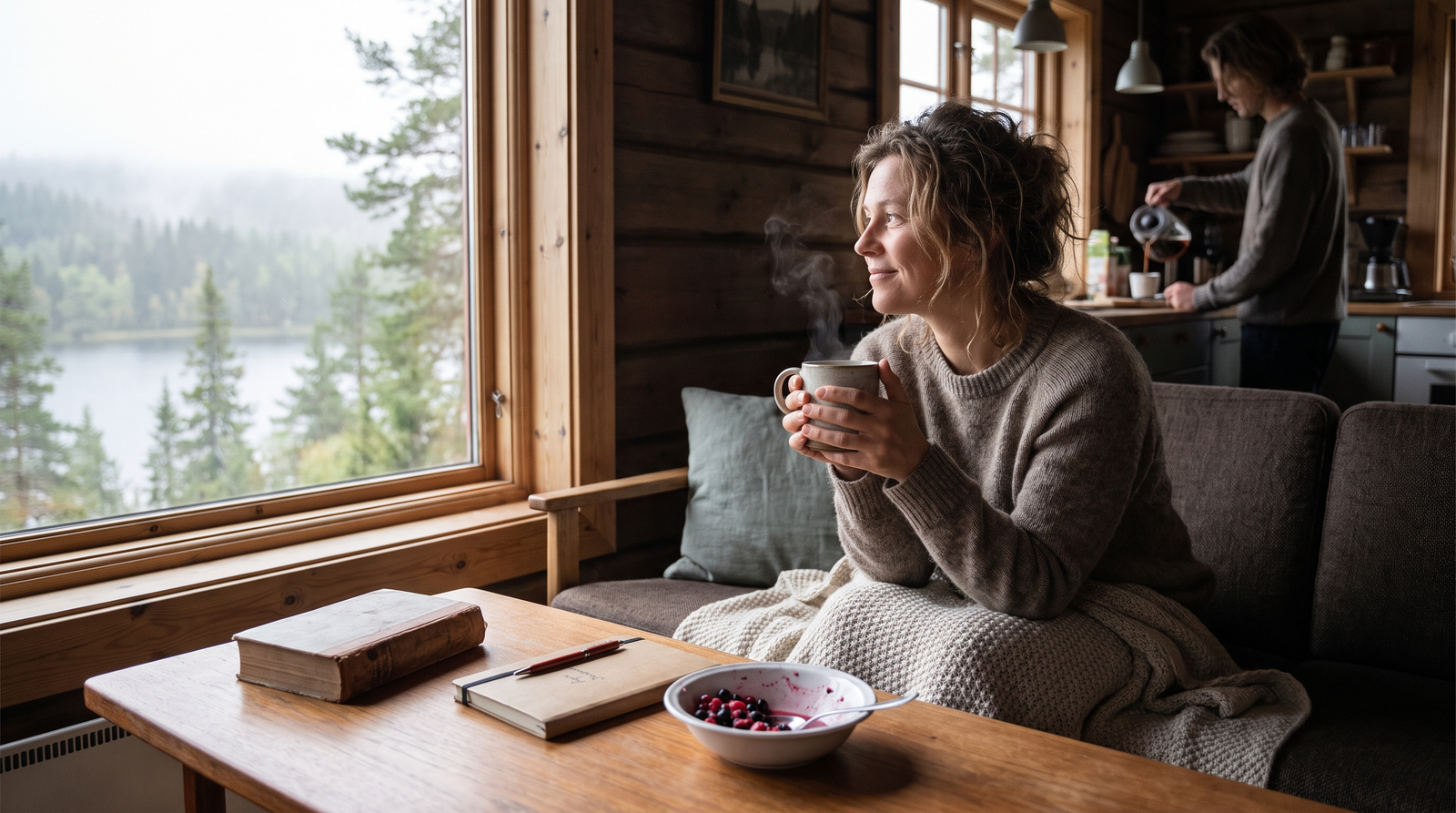
Drink something warm. Make coffee, green tea, or your favorite herbal infusion and enjoy a few quiet minutes before checking messages. A familiar morning drink can become a small signal that the day has begun.
Move your body gently. Try five minutes of stretching, a short walk, or a few simple mobility exercises. You don’t need an intense workout to begin the day with movement.
Choose your three priorities. Write down the three things that matter most today, including one practical task, one responsibility, and one thing that supports your well-being. This keeps your list realistic instead of turning your morning into a race. If you’re short on time, keep the routine to ten minutes: switch on the lights, drink water, stretch briefly, and choose your main priority. Consistency matters more than creating an elaborate ritual.
Routine Two: The Night Routine
A good winter evening routine helps you transition from the demands of the day into a calmer part of your evening. Rather than trying to transform your entire night, focus on a few small actions that make tomorrow easier.
Reset one area of your home. Spend five to ten minutes clearing the kitchen counter, putting away clothes, or preparing your work bag. You don’t need to deep-clean the house; simply make one space feel more manageable.
Prepare for tomorrow. Choose your clothes, check your calendar, and gather anything you’ll need in the morning. If you commute, check the weather and prepare suitable outerwear so you aren’t scrambling when it’s time to leave.
Create a softer atmosphere. Lower bright lights as bedtime approaches, put your phone aside for a while, and choose an activity that helps you relax. You might read a book, listen to quiet music, take a warm shower, or enjoy a cup of caffeine-free herbal tea. Remember that herbal tea isn’t automatically suitable for everyone, so check the ingredients if you have relevant health concerns or take medication.
Keep your sleep schedule reasonably consistent. Going to bed and waking up at similar times can support sleep quality. Adults generally need at least seven hours of sleep, though individual needs vary. Your evening doesn’t have to be perfect; even a short, repeatable routine can help signal that it’s time to slow down.
Routine Three: The Sunday Reset Routine
Sunday can be a useful moment to prepare for the week ahead, especially when winter weather makes everyday errands and decisions feel more demanding. But your reset shouldn’t take over the entire day. Aim for a simple routine that leaves you feeling prepared rather than exhausted.
Plan the week ahead. Look at your appointments, work commitments, family responsibilities, and any deadlines. Write down the essentials so you can see what the week actually requires.
Plan a few easy meals. Choose two or three meals you can prepare without much effort, make a grocery list, and check what you already have at home. Soups, roasted vegetables, grain bowls, and simple pasta dishes can be practical options during colder weather. Refresh your space. Put away laundry, change your bedding if needed, clear the kitchen, and prepare the areas you’ll use most during the week. Set a timer so tidying doesn’t expand into an all-day project.
Prepare your winter essentials. Check your coat, gloves, scarf, boots, umbrella, and bag. Keep frequently used items together so leaving home is easier. Finally, schedule something enjoyable. It could be a walk, a coffee with a friend, a favorite film, or an hour without obligations. A weekly reset should create breathing room, not remove every spontaneous moment from your life.
Read more: The Scandinavian 3-Zone Decompression Entryway Design: How to Stop Home Anxiety at the Front Door
Routine Four: The Reset / Decompress Routine
Some winter days are simply a lot. Perhaps work has been demanding, the house feels chaotic, or you’ve spent hours caring for other people. On those days, you may not need another productivity routine. You may need a reset. Start by stepping away from whatever is making you feel overwhelmed, even if you only have five minutes. Put your phone down, relax your shoulders, and take a few slow, comfortable breaths. If possible, move to a quieter room or step outside for fresh air. Next, identify what you need right now. Are you hungry, tired, overstimulated, lonely, or worried about something unfinished? You don’t have to solve everything immediately.
Sometimes recognizing the problem is enough to help you choose the next step. Try a short walk, a warm shower, a simple snack, or a quiet cup of tea. If your thoughts are racing, write down the things you can address later instead of trying to hold everything in your head. You can also use a simple rule: choose one thing to finish, one thing to postpone, and one thing to let go of for today. This routine isn’t about eliminating stress or pretending difficult feelings don’t exist. It’s about creating a small pause so you can respond more thoughtfully instead of pushing yourself until you’re completely drained.
How to Make These Four Routines Work in Real Life
You don’t need to adopt all four routines at once. Start with the one that would make the biggest difference to your day. If mornings are difficult, build a short morning ritual. If your evenings feel chaotic, focus on preparing for tomorrow. If the week regularly catches you off guard, try a 20-minute Sunday reset. And if you’re constantly rushing from one responsibility to another, make the decompression routine your priority. Keep the habits flexible enough to survive busy days. On a difficult morning, opening the curtains and drinking something warm may be enough.
On a busy Sunday, planning meals and checking your calendar might be all you manage. You can also make the routines more enjoyable by choosing things you genuinely like: a favorite mug, comfortable knitwear, soft lighting, or a playlist that makes staying home feel inviting. The point isn’t to purchase a new winter lifestyle. It’s to make your existing life a little easier to manage.
Make Winter Feel a Little More Manageable
A long winter doesn’t have to mean putting your life on hold until spring. With a few simple habits, you can create a daily rhythm that feels calmer, more comfortable, and easier to maintain. Start your morning gently, make your evenings less chaotic, use Sunday to prepare for the week, and give yourself permission to pause when everything feels like too much. These routines aren’t about being productive every minute or creating a picture-perfect home. They’re about supporting yourself through a season that can ask a lot of your time and energy. Choose one habit, try it for a week, and adjust it to fit your life. You don’t need a perfect routine to have a better winter. Sometimes, a warm drink, a little daylight, and a few minutes of quiet are a good place to start.
Frequently Asked Questions
What is a Nordic daily routine? It’s a flexible approach to everyday habits inspired by aspects of Nordic living, such as simplicity, time outdoors, comfort, and practical routines. There isn’t one official schedule followed by everyone in Nordic countries.
How do I maintain a routine when winter makes me tired? Start small and focus on regular sleep, daylight exposure when available, gentle movement, and manageable daily priorities. If tiredness is persistent or significantly affects your life, consider discussing it with a healthcare professional.
Do I need to wake up early to follow a Nordic routine? No. Build your routine around your work, family responsibilities, and natural schedule. Consistency and practicality matter more than waking up at a particular time.
What is the most important winter habit? There isn’t one habit that works for everyone. A consistent sleep schedule, getting daylight when possible, and making time for rest are useful starting points.


One thought on “4 Daily Routine Habits to Survive Nordic Longer Winter”