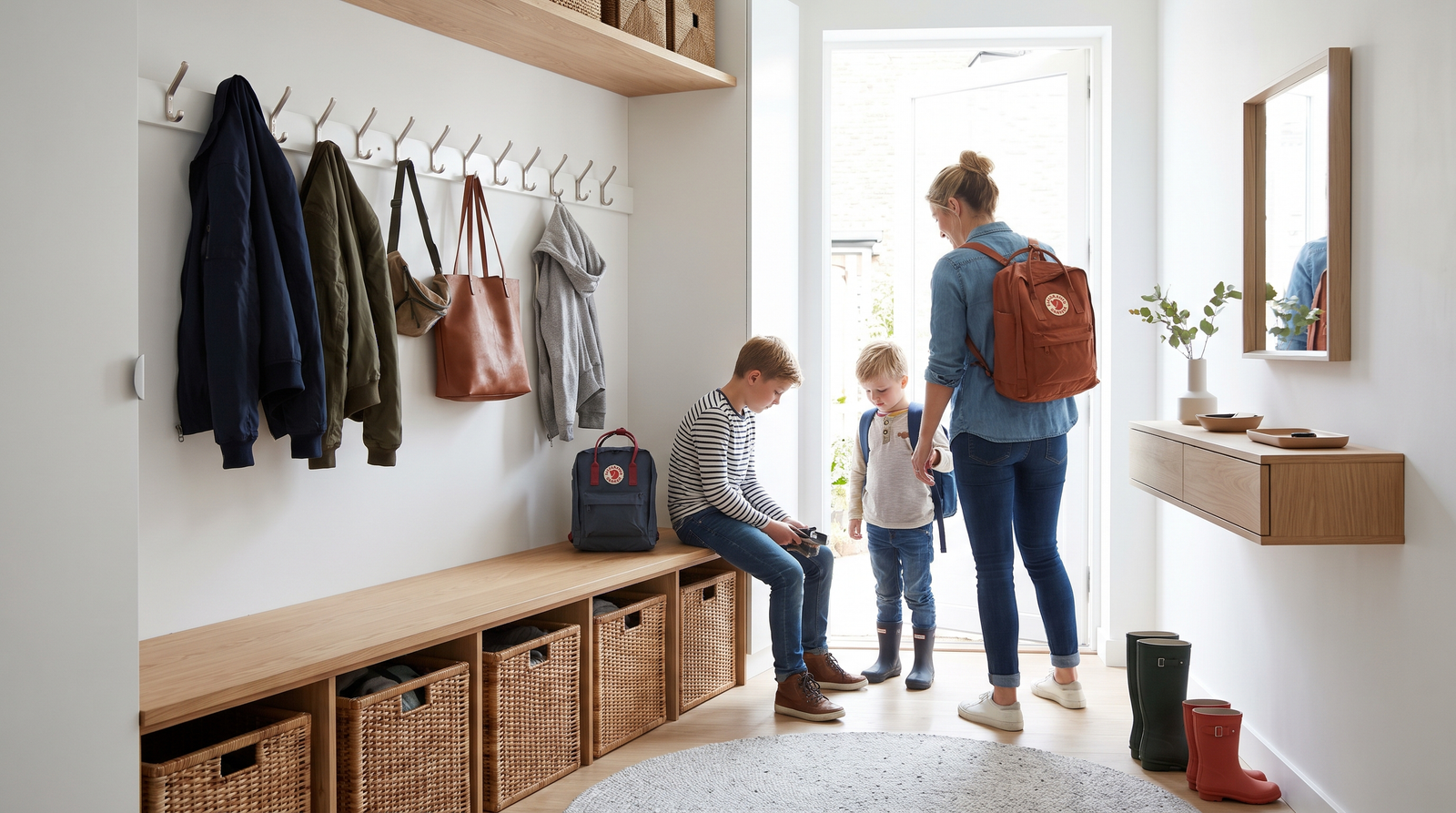
Make busy mornings easier with a toddler-friendly Nordic entryway system for shoes, coats, daily essentials—without turning your hallway into a clutter zone.
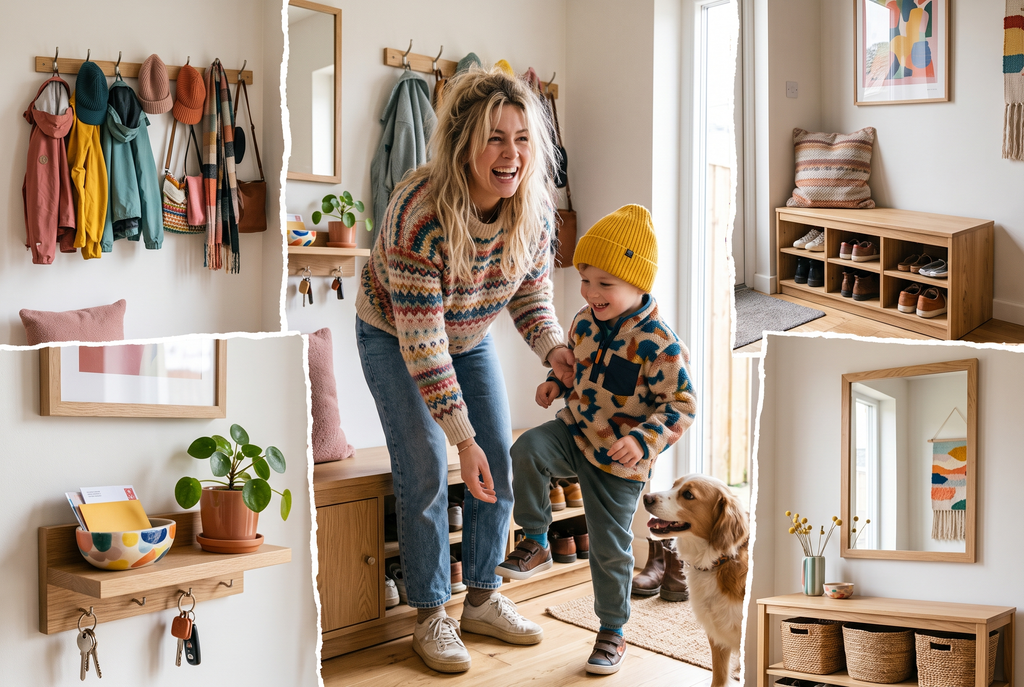
All products are personally selected by us. If you buy something, we may earn an affiliate commission
If leaving the house with a toddler feels like an Olympic event involving one missing shoe, three coats, and a backpack nobody can find, your entryway needs a system—not more yelling.
Table of Contents
It starts innocently. You tell your toddler it’s time to leave.
“I’m ready!” Except they aren’t wearing shoes.
One shoe is somewhere beneath the sofa.
The other is apparently in the bathroom.
Their coat is on the floor.
Their backpack is missing.
You find it under a chair.
Then you discover that yesterday’s snack is still inside.
Now you’re late. You’re frustrated. Your child is suddenly fascinated by a sock.
And the entryway looks like a small tornado passed through it.
Sound familiar?
The problem isn’t necessarily that your toddler is messy.
Toddlers are supposed to be messy.
They’re still learning routines, sequencing, responsibility, and the simple concept that objects have homes.
The bigger problem is that many entryways are designed for adults.
Hooks are too high.
Storage is too deep.
Shoes disappear into giant cabinets.
Bags end up on the floor.
Everything requires an adult to reach, open, lift, sort, or remember.
Then we wonder why our children don’t independently put things away.
Here’s the Nordic-inspired solution:
Design the entryway around the person who actually needs to use it.
That means lower storage, fewer decisions, clear categories, and a home for every departure essential.
The result isn’t merely a prettier hallway.
It’s a tiny system that can turn the morning exit from chaos into a repeatable routine.
Read more: How to Set a Soft Scandinavian Table for Two
The Nordic Hall: More Than a Pretty Entrance
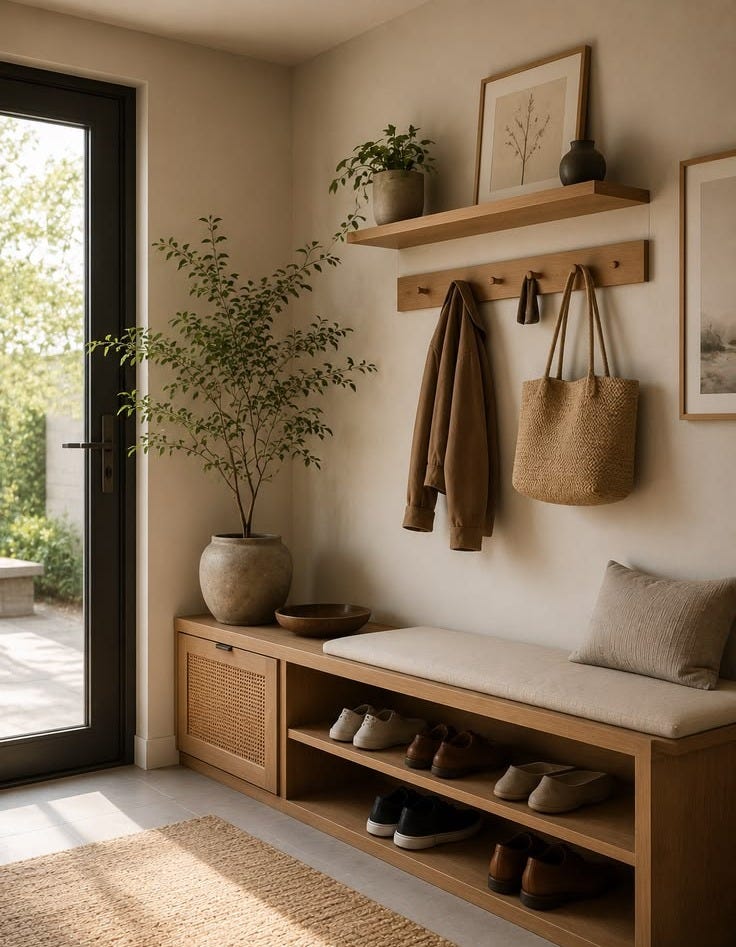
Scandinavian homes often treat the entryway as a hardworking transition zone.
It has to deal with weather.
Shoes.
Outerwear.
Bags.
Wet clothing.
Outdoor equipment.
And the constant movement of people coming and going.
This is where the broader idea of hållbarhet, a Swedish term associated with sustainability and durability, offers a useful mindset: choose systems and objects that support long-term, practical living rather than creating disposable solutions or unnecessary clutter.
In a family entryway, that translates into something wonderfully simple:
Everything you need to leave the house should be easy to reach, easy to identify, and easy to put away.
The entryway shouldn’t be a storage graveyard.
It should be a launchpad.
Step One: Build the Toddler Landing Zone
Start low.
Really low.
Your child should be able to reach their everyday belongings without asking you for help.
If the only coat hooks are five feet above the floor, your toddler isn’t learning independence.
They’re learning to yell:
“Mom! My coat!”
So create a child-height landing zone.
This can be as simple as a row of sturdy wall hooks installed at an appropriate, safe height.
Give each child a designated hook.
Not six.
One.
Maybe two if they regularly need separate spaces for a coat and backpack.
The fewer decisions, the better.
What Belongs Here?
Only the things your child needs every day or almost every day:
- Current coat
- Everyday backpack
- Hat or seasonal accessory
- Small outdoor bag if necessary
That’s it.
Don’t hang every jacket your child owns.
Don’t turn the hook into a historical archive of outerwear.
Seasonal pieces can live elsewhere.
The entryway should represent today, not every possible weather condition.
Make the System Visible
Toddlers don’t naturally understand an invisible organizational system.
They need visual cues.
If your child has a blue backpack, place it on the same hook every day.
If you use a small basket for hats and gloves, keep it directly below the coat hooks.
If shoes belong underneath, make that relationship obvious.
You’re creating a vertical sequence:
Coat
↓
Bag
↓
Shoes
That’s practically a toddler-sized flowchart.
And that’s exactly what you want.
The fewer steps between “I need to get ready” and “I’m ready,” the better.
The Product Upgrade: IKEA TROFAST
For low, accessible storage, the IKEA TROFAST system is worth considering.
Its modular frame-and-bin design allows you to place storage containers at different heights, making it possible to create a child-accessible zone for hats, gloves, shoes, or other outdoor essentials.
You can shop the IKEA TROFAST system directly from IKEA.
The important part isn’t the brand.
It’s the principle.
Storage should meet the child where they are.
Choose a configuration that fits your actual hallway dimensions, anchor furniture according to the manufacturer’s instructions, and avoid placing heavy or unstable furniture where a child could climb on it.
Toddler-friendly doesn’t mean toddler-dangerous.
Step Two: Create the Shoe Parking Spot
Shoes are where entryways usually lose the plot.
One pair becomes three.
Three becomes six.
Then somebody comes inside with muddy boots and suddenly the floor is a geological experiment.
You need a clear shoe boundary.
Not a vague “put your shoes somewhere over there.”
A specific parking spot.
The One-Pair Rule
For everyday toddler storage, consider keeping only the current rotation immediately accessible.
For example:
- Everyday sneakers
- Current weather shoe or boot
Everything else can be stored elsewhere.
Why?
Because too many choices create friction.
A toddler standing in front of twelve pairs of shoes isn’t becoming independent.
They’re conducting a footwear fashion consultation.
Keep the decision simple.
These are your shoes. This is where they go.
Use a Washable Mat as the Boundary
A low-profile, washable entry mat can do more than protect your floor.
It can visually define the shoe zone.
Think of it as a parking lot.
Shoes stay on the mat.
Not in the hallway.
Not underneath the bench.
Not beside the front door.
A washable option such as Ruggable’s machine-washable rug system can be useful for families because the covers can be removed and washed when muddy shoes inevitably leave their mark.
You can browse Ruggable’s current washable entryway rugs.
Check the current dimensions and care instructions before purchasing, particularly if you need a very narrow hallway runner or a mat suitable for your specific flooring.
The exact brand matters less than the principle:
Create a visible boundary for dirt.
Step Three: Hide the Chaos
Here’s the secret to making a family entryway look calm:
Don’t try to make every object look beautiful.
Hide most of it.
Open shelving is wonderful in photographs.
In real family life, it can become a visual catalog of every object your household owns.
Shoes.
Bags.
Hats.
Gloves.
Sports equipment.
Random sticks.
Mystery rocks.
Three water bottles.
A snack wrapper.
You know the drill.
Closed or semi-closed storage is much more forgiving.
A slim cabinet, bench with concealed storage, or closed basket can make the entryway appear dramatically calmer without requiring your family to own dramatically fewer things.
This is especially useful with toddlers.
Their belongings can remain accessible without being visually exposed.
Think “Low Profile,” Not “Big Storage”
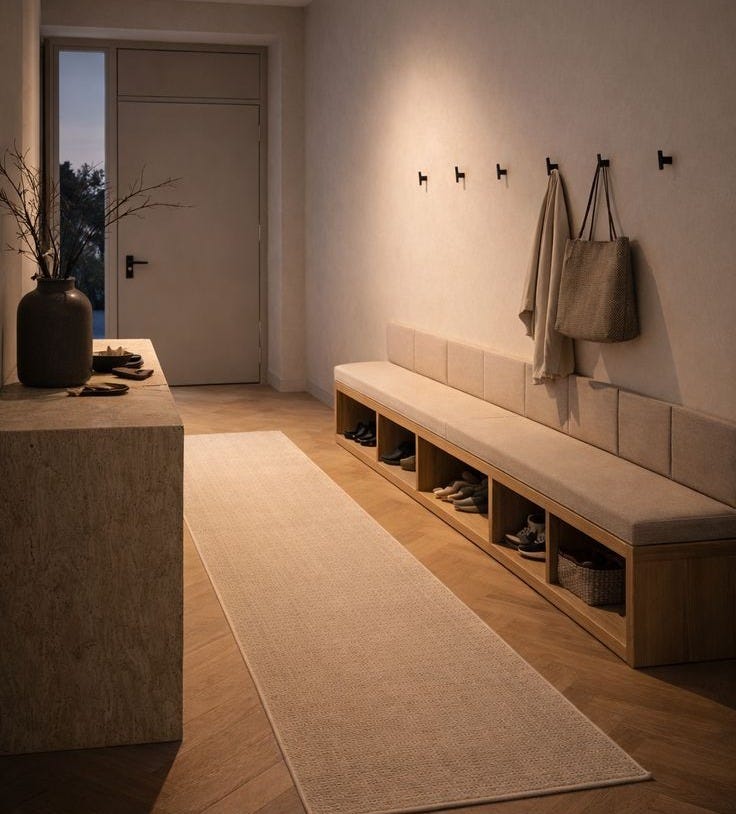
A common mistake is solving entryway chaos by buying the biggest storage cabinet you can fit.
That can backfire.
A massive piece of furniture can make a narrow hallway feel even smaller.
Instead, look for:
- Low-depth cabinets
- Vertical storage
- Wall-mounted hooks
- Under-bench storage
- Narrow baskets
- Closed compartments
The goal is to use the walls and vertical space while preserving a clear walking path.
Your entryway needs circulation space.
After all, you’re trying to get everyone out the door—not build a furniture showroom in front of it.
The Toddler Independence Test
Here’s a simple way to test whether your system actually works.
Stand outside your entryway.
Imagine you’re three years old.
Now ask:
Can I reach my coat?
Can I find my shoes?
Do I know where my bag goes?
Can I put everything away without opening a complicated cabinet?
Can I tell where each category belongs?
If the answer is no, the system isn’t child-friendly yet.
And don’t worry if your toddler doesn’t immediately become an organizational genius.
The goal is repetition.
The first week might be:
“Coat on the hook.”
The next week:
“Where does your coat go?”
Eventually:
Your child hangs it up without being asked.
That’s how habits form.
Not through one inspirational speech about responsibility.
Through environmental cues repeated every day.
The Two-Minute Departure Reset
Your morning routine should happen before you’re already late.
So create a tiny reset the night before.
Two minutes.
That’s it.
Check:
Coats on hooks.
Backpacks in place.
Shoes paired.
Water bottles ready.
Anything needed for tomorrow placed in the appropriate departure zone.
This changes the morning dramatically.
You’re no longer asking:
“Where is everything?”
You’re simply collecting what has already been staged.
Think of it like preparing a tiny launchpad.
Morning-you will thank evening-you.
Profusely.
Possibly with coffee.
Give Every Family Member a Zone
If you have multiple children, don’t create one giant shared pile.
Give each child a recognizable location.
That might mean:
Child A: Green hook + green basket.
Child B: Blue hook + blue basket.
Or simply different labeled hooks if your children are old enough to recognize names.
The goal isn’t to make your hallway look like a preschool classroom.
It’s to remove ambiguity.
When something has an obvious owner, it’s easier to return it to its place.
And if your children are too young to read, simple symbols can work.
A sun.
A star.
A heart.
A little animal.
The label doesn’t have to be sophisticated.
It just has to mean something to them.
The “One In, One Out” Outerwear Rule
Family entryways become overwhelmed because outerwear multiplies.
A child needs a raincoat.
Then a winter coat.
Then a fleece.
Then a hoodie.
Then a backup hoodie.
Then the hoodie they haven’t worn since October.
Suddenly every hook is occupied.
Set a practical limit.
Only the current season’s daily-use outerwear lives in the entryway.
Everything else goes into a closet, storage bin, or another designated area.
This keeps the entryway connected to your actual daily life.
Not your theoretical daily life.
What About Mud?
If you live somewhere rainy, snowy, or muddy, build for it.
Don’t pretend your entryway will remain dry.
Create a dedicated wet-zone.
A boot tray.
A washable mat.
A hook for rain gear.
A basket or rail for reusable shopping bags.
If wet clothing needs to dry, give it somewhere appropriate to do so.
The Scandinavian principle here is wonderfully practical:
Don’t fight your climate. Design for it.
A muddy boot doesn’t become less muddy because your hallway is minimalist.
Give the mud somewhere to go.
The Real Goal: Fewer Morning Decisions
Think about how many decisions a rushed parent makes before 8 a.m.
What are we eating?
Where’s the lunch?
Is the backpack packed?
Where are the shoes?
Who needs a jacket?
Did anyone brush their teeth?
Where are the keys?
Why is there a banana in the backpack?
The last thing your home should do is add another hundred tiny decisions.
That’s why a Nordic entryway works so well.
It’s not really about aesthetics.
It’s about decision reduction.
When the environment tells everyone what happens next, the morning requires less negotiation.
And that’s a beautiful thing.
Your Weekend Entryway Reset
You can build the system without remodeling your home.
Start with three steps.
1. Lower It
Create child-accessible hooks and storage.
2. Define It
Give shoes, bags, coats, and accessories specific zones.
3. Hide It
Use closed or concealed storage for everything that doesn’t need to be visually displayed.
Then remove anything that doesn’t belong in the entryway.
Be ruthless.
If it isn’t needed for leaving or arriving, ask whether it needs to live there.
The Final Test
On Monday morning, don’t judge the system by whether the hallway looks perfect.
Judge it by something more important:
How many times did you have to say, “Where is your…?”
Where are your shoes?
Where is your coat?
Where’s your backpack?
Where did you put your hat?
The goal is to make those questions gradually disappear.
Because a well-designed entryway doesn’t just store things.
It teaches the household how to move through the day.
And that includes toddlers.
You don’t need your three-year-old to become a minimalist.
You need them to understand that the coat goes here.
The shoes go there.
The backpack has a home.
And tomorrow morning, everything will still be waiting.
That’s the real beauty of a Nordic-inspired family entryway.
It doesn’t demand perfection.
It creates predictability.
And when you’re parenting small humans while trying to get everyone out the door on time, predictability can feel like luxury.
So give the toddler a hook.
Give the shoes a parking spot.
Give the clutter somewhere to hide.
Then let your hallway do some of the parenting work for you.
Not all of it, obviously.
We’re talking about toddlers.
But even a little help from the walls can make a surprisingly big difference.
2 thoughts on “The 3-Step Nordic Entryway System: End Morning Departure Chaos”