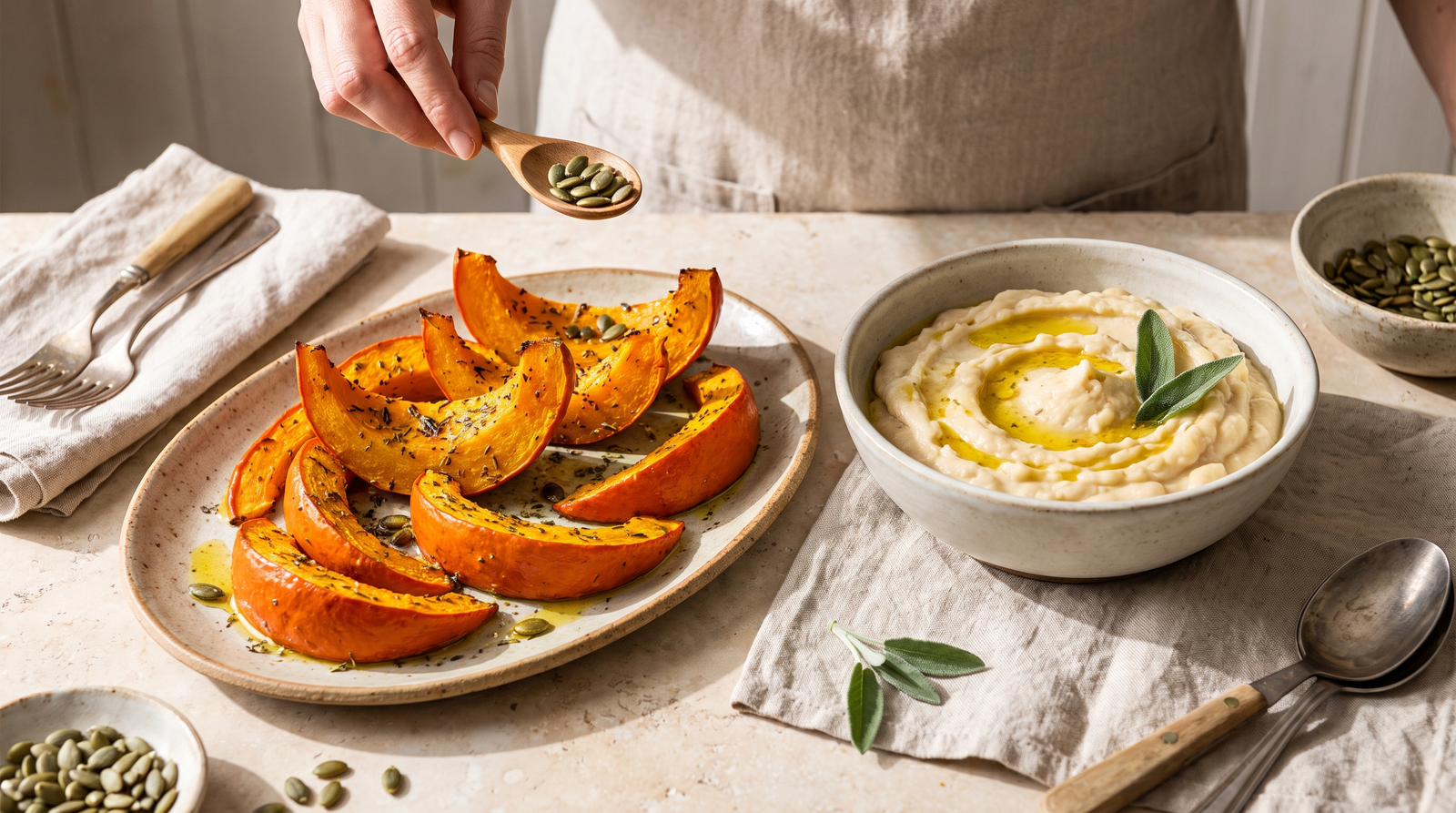
Make this minimalist savory pumpkin dinner with roasted Hokkaido pumpkin, creamy butter bean mash, crispy sage, brown butter, lemon, and toasted seeds.
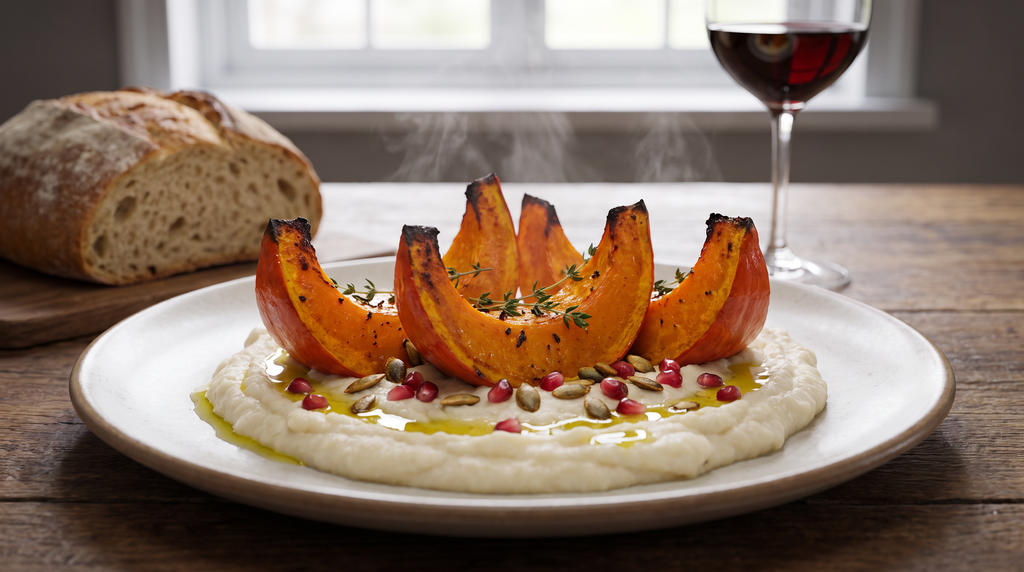
Roasted Pumpkin Wedges with Sage & Brown Butter
A minimalist, visually stunning savory pumpkin recipe featuring crisp sage, creamy butter bean mash, lemon, toasted seeds, and golden-brown butter.
Table of Contents
Introduction
There are some dinners that need a long ingredient list, three pans, and an entire evening to pull together. This isn’t one of them.
This is the kind of meal I want when I’m craving something that feels thoughtful and beautiful but don’t actually want to spend hours cooking. Roasted pumpkin wedges, creamy butter bean mash, crispy sage, golden brown butter, and a scattering of toasted seeds come together on one plate to create something that looks restaurant-worthy while being surprisingly straightforward.
The inspiration is deliberately minimalist. Instead of treating pumpkin as a sweet ingredient destined for pie, cake, or syrupy autumn desserts, this recipe takes it in a more savory, earthy direction. The result is a warm and satisfying dinner built around contrast: vibrant orange pumpkin against creamy white bean purée, crisp sage against silky mash, and caramelized edges against a smooth, rich base.
The Scandinavian influence comes through in that simplicity. Nordic cooking has a wonderful way of letting a few good ingredients carry the meal rather than burying them under complicated sauces and endless garnishes. Here, earthy pumpkin meets creamy legumes, fresh sage, bright lemon, and nutty brown butter.
And honestly, that’s more than enough.
Why This Savory Pumpkin Recipe Works
Pumpkin can sometimes get boxed into a very narrow category. We think pumpkin spice, pumpkin pie, sweet breads, and other desserts. But pumpkin is naturally earthy and slightly sweet, which makes it incredibly useful in savory cooking.
Roasting brings out those natural sugars while creating deeply caramelized edges. Hokkaido pumpkin is particularly good here because its flesh becomes tender and creamy while the skin can remain on during roasting, meaning there’s no need to wrestle with peeling a hard pumpkin beforehand.
The butter bean mash provides the perfect counterpoint. It’s smooth, creamy, mildly nutty, and filling without overpowering the pumpkin.
Then comes the brown butter.
This is the part that makes the whole plate sing.
As the butter cooks, its milk solids turn golden and develop a toasted, nutty aroma. Add fresh sage leaves and they become crisp and fragrant while infusing the butter with their earthy flavor. Finish everything with lemon zest and juice, and suddenly the richness has a bright little spark running through it.
Ingredients
For the roasted pumpkin wedges, you’ll need:
- 1 medium Hokkaido or sugar pumpkin, cut into thick wedges
- Cold-pressed rapeseed oil
- Sea salt
- Freshly ground black pepper
For the creamy butter bean mash:
- 2 cans (400g each) butter beans, drained and rinsed
- 1 garlic clove
- A splash of water
- A drizzle of cold-pressed rapeseed oil
- Juice of 1/2 lemon
- Sea salt and black pepper, to taste
For the brown butter and toppings:
- 50g butter
- A handful of fresh sage leaves
- Zest of 1/2 lemon
- 2 tbsp toasted pine nuts or pumpkin seeds
A good heavy baking sheet is useful for getting those beautiful caramelized pumpkin edges, while a high-speed blender or food processor will give the butter bean mash its exceptionally smooth texture. If you’re shopping for kitchen basics, these are the sorts of tools worth investing in because you’ll use them far beyond this one recipe.
Step 1: Roast the Pumpkin Until Caramelized
Preheat your oven to 200°C (400°F).
Cut the pumpkin into thick wedges. If you’re using Hokkaido pumpkin, there’s generally no need to remove the skin before roasting; it softens beautifully in the oven and helps the wedges hold their shape.
Arrange the wedges on a baking sheet and toss them with cold-pressed rapeseed oil, sea salt, and freshly ground black pepper. Give them enough space to roast rather than steam. That’s an easy detail to overlook, but it makes a huge difference.
Roast for approximately 25–30 minutes, turning if needed, until the flesh is tender and the edges are beautifully caramelized.
You’re looking for contrast here.
The centers should be soft and almost creamy, while the edges should have darker golden-brown spots. Those caramelized areas are where so much of the flavor develops.
A rimmed stainless-steel sheet pan works particularly well because it gives you enough space to spread the wedges out while keeping any oil from running into your oven.
Step 2: Make the Creamy Butter Bean Mash
While the pumpkin is roasting, make the mash.
Drain and rinse two cans of butter beans, then add them to a food processor along with one garlic clove, a splash of water, a drizzle of rapeseed oil, and the juice of half a lemon.
Blend until completely smooth and creamy.
Don’t rush this step.
If the mixture looks too thick, add a little more water, just a tablespoon at a time, until you reach a soft, silky consistency. You want something closer to a smooth purée than chunky mashed beans.
Taste and adjust the seasoning with sea salt, black pepper, and additional lemon juice if needed.
Warm the mash gently in a saucepan before serving. It doesn’t need to boil; you simply want it pleasantly warm when it meets the roasted pumpkin.
If you love exceptionally smooth purées, a high-speed blender can take this to another level. A food processor works perfectly well, though, so there’s no need to buy special equipment just for this recipe.
Step 3: Make the Brown Butter and Crispy Sage
Now comes the magic.
Melt 50g of butter in a small pan over medium heat.
As it melts, add the fresh sage leaves.
The sage will begin to sizzle and crisp while the butter gradually changes from yellow to golden brown. Keep a close eye on it because brown butter can go from beautifully nutty to burnt surprisingly quickly.
Once the butter is golden and smells toasted and nutty, remove the pan from the heat.
Add the lemon zest and give it a quick stir.
The combination of browned butter, crispy sage, and lemon is wonderfully balanced. You get richness, herbaceous flavor, nuttiness, and freshness all at once.
If you have a small stainless-steel skillet, it’s ideal for this step because the lighter surface makes it easier to see the butter changing color.
Step 4: Toast the Seeds
While the pumpkin and mash are coming together, toast your pine nuts or pumpkin seeds.
You can do this in a dry skillet over medium-low heat, stirring frequently until golden and fragrant.
Don’t walk away.
Seeds can go from perfectly toasted to bitter in a matter of moments.
Pine nuts give the dish a richer, buttery crunch, while pumpkin seeds bring a slightly more rustic texture and reinforce the pumpkin theme.
Either works beautifully.
The Minimalist Plating Trick
This is where the dish becomes something more than simply a collection of cooked ingredients.
Start with a wide, shallow plate.
Spoon a generous layer of the warm butter bean mash into the center and use the back of the spoon to spread it into a loose oval or circular shape.
Don’t worry about making it perfectly symmetrical.
The beauty of minimalist plating comes from leaving some empty space.
Arrange two or three roasted pumpkin wedges over the mash. Let some of the creamy white purée remain visible around the edges.
Now spoon the warm brown butter over the pumpkin and mash, making sure a few crispy sage leaves land on top.
Finish with your toasted pine nuts or pumpkin seeds.
Finally, add a tiny scattering of lemon zest and perhaps a few flakes of sea salt.
That’s it.
No mountain of garnish.
No complicated sauce.
Just color, texture, and contrast.
Why the Color Contrast Matters
Part of what makes this dinner so visually appealing is how naturally the ingredients contrast.
The pumpkin is vibrant orange.
The butter bean mash is creamy white.
The sage brings a deep green.
The brown butter adds warm golden tones.
The toasted seeds provide darker flecks and crunch.
This is a useful principle far beyond this particular recipe. If you’re trying to make simple food look more elegant, think about color contrast and texture before adding more ingredients.
A pale creamy base underneath something deeply roasted will almost always look more interesting than putting everything into one bowl and stirring it together.
Minimalism doesn’t mean boring.
It means being selective.
The Scandinavian Twist
The Scandinavian influence here isn’t about making the dish look themed or adding Scandinavian ingredients simply for the sake of it.
It’s about the philosophy.
The meal takes a familiar seasonal ingredient and treats it simply. Pumpkin isn’t buried beneath sugar or heavy spices. Instead, its natural sweetness is balanced with earthy sage, creamy beans, nutty butter, and sharp lemon.
The butter bean mash also plays into the comforting Nordic idea of creamy vegetable and root-vegetable accompaniments. It’s hearty, understated, and designed to complement rather than compete with the main ingredient.
For more Nordic-inspired squash and pumpkin inspiration, True North Kitchen’s collection of Nordic-inspired squash and pumpkin recipes is a useful place to explore.
Easy Ways to Make This Dinner Your Own
The basic recipe is beautiful as written, but there’s plenty of room to personalize it.
If you want more greens, add a handful of wilted kale, spinach, or roasted cavolo nero.
For extra acidity, serve with another squeeze of lemon just before eating.
If you don’t have butter beans, cannellini beans make a good substitute and create a similarly creamy texture.
You can also swap the pumpkin seeds for hazelnuts or walnuts if that’s what you have in the pantry.
And if you want to make the dish completely plant-based, use a good plant-based butter for the sage brown-butter-style sauce. You’ll lose some of the traditional dairy richness, but the toasted sage, lemon, and roasted pumpkin will still give you plenty of flavor.
What to Serve With Roasted Pumpkin Wedges
This dish is substantial enough to work as a complete minimalist dinner, especially with the generous butter bean mash.
If you’re serving it as part of a larger meal, keep the sides simple.
A bitter green salad dressed with lemon and olive oil would add freshness. Crusty sourdough would also be excellent for catching any leftover brown butter.
For a heartier table, you could serve it alongside roasted mushrooms or a simple grain salad.
But don’t overcomplicate it.
Part of the charm is that the pumpkin and bean mash already give you softness, richness, protein, and plenty of texture.
A Few Small Details That Make a Big Difference
Don’t overcrowd the roasting pan. Give the pumpkin wedges room so they roast and caramelize properly.
Season in layers. Salt the pumpkin before roasting, season the bean mash separately, and taste the brown butter before plating.
Keep the mash smooth. A silky texture makes the contrast with the roasted pumpkin much more dramatic.
Watch the brown butter. Medium heat and a little patience are your friends.
Use lemon at the end. The acidity keeps the butter and beans from feeling too rich.
Leave some empty space on the plate. It may sound like a tiny detail, but it makes a simple dinner look immediately more refined.
Frequently Asked Questions
Can I use regular pumpkin instead of Hokkaido pumpkin?
Yes. Sugar pumpkin or another good roasting pumpkin works well. Choose a variety with firm flesh that becomes tender and caramelized rather than watery.
Do I need to peel Hokkaido pumpkin?
Usually, no. Hokkaido pumpkin has a relatively tender skin that softens during roasting. Simply wash it well, remove the seeds, and cut it into wedges.
Can I make the butter bean mash ahead of time?
Yes. Prepare the mash in advance and refrigerate it in an airtight container. Warm it gently before serving and add a little water or oil if it has thickened.
Can I make this recipe vegan?
Yes. Replace the butter with a plant-based butter alternative. Use a high-quality version that browns or develops a nutty flavor when heated for the best result.
What can I use instead of butter beans?
Cannellini beans are an excellent alternative. Chickpeas can also work, although they won’t produce quite the same naturally creamy texture.
What makes this a minimalist dinner?
The recipe relies on a small number of ingredients and focuses on how they interact rather than adding unnecessary components. The visual appeal comes from the contrast between the roasted pumpkin, creamy white mash, crispy sage, golden butter, and toasted seeds.
The Final Plate
There’s something satisfying about a dinner that proves you don’t need a complicated recipe to make food feel special.
These roasted pumpkin wedges with butter bean mash and sage are a perfect example. The pumpkin becomes deeply caramelized in the oven, the butter beans turn silky and creamy, and the sage gets crisp in a pool of golden brown butter. Lemon cuts through the richness, while toasted pine nuts or pumpkin seeds add the final bit of crunch.
It’s simple food, but it doesn’t feel plain.
And that’s really the point of minimalist cooking.
You’re not stripping flavor away. You’re giving each ingredient enough space to actually taste like itself.
Serve the creamy bean mash generously, arrange the pumpkin wedges with a little intention, drizzle over that fragrant sage butter, and finish with your toasted seeds.
Then stop.
You don’t need another garnish.
You don’t need another sauce.
You don’t need to fuss with it.
The plate already has everything it needs: color, contrast, warmth, texture, and that unmistakable feeling of autumn arriving at the table.
For more inspiration, explore Nordic-inspired squash and pumpkin recipes or browse Scandi Baking’s pumpkin recipes for another take on the season’s favorite ingredient.
Sometimes, the most memorable dinner is the one that looks effortless.
3 thoughts on “Roasted Hokkaido Pumpkin Wedges with Creamy Butter Bean Mash”