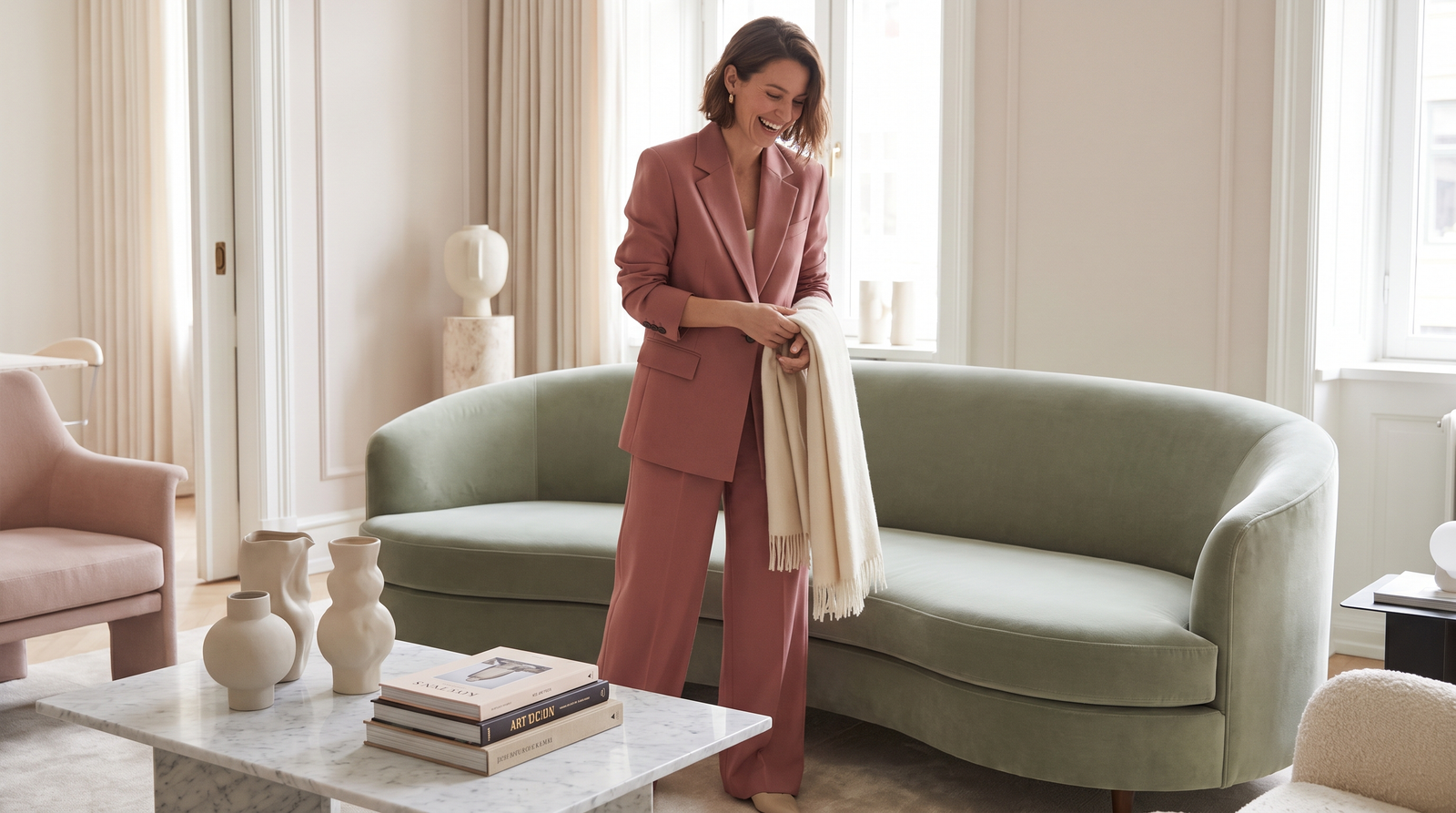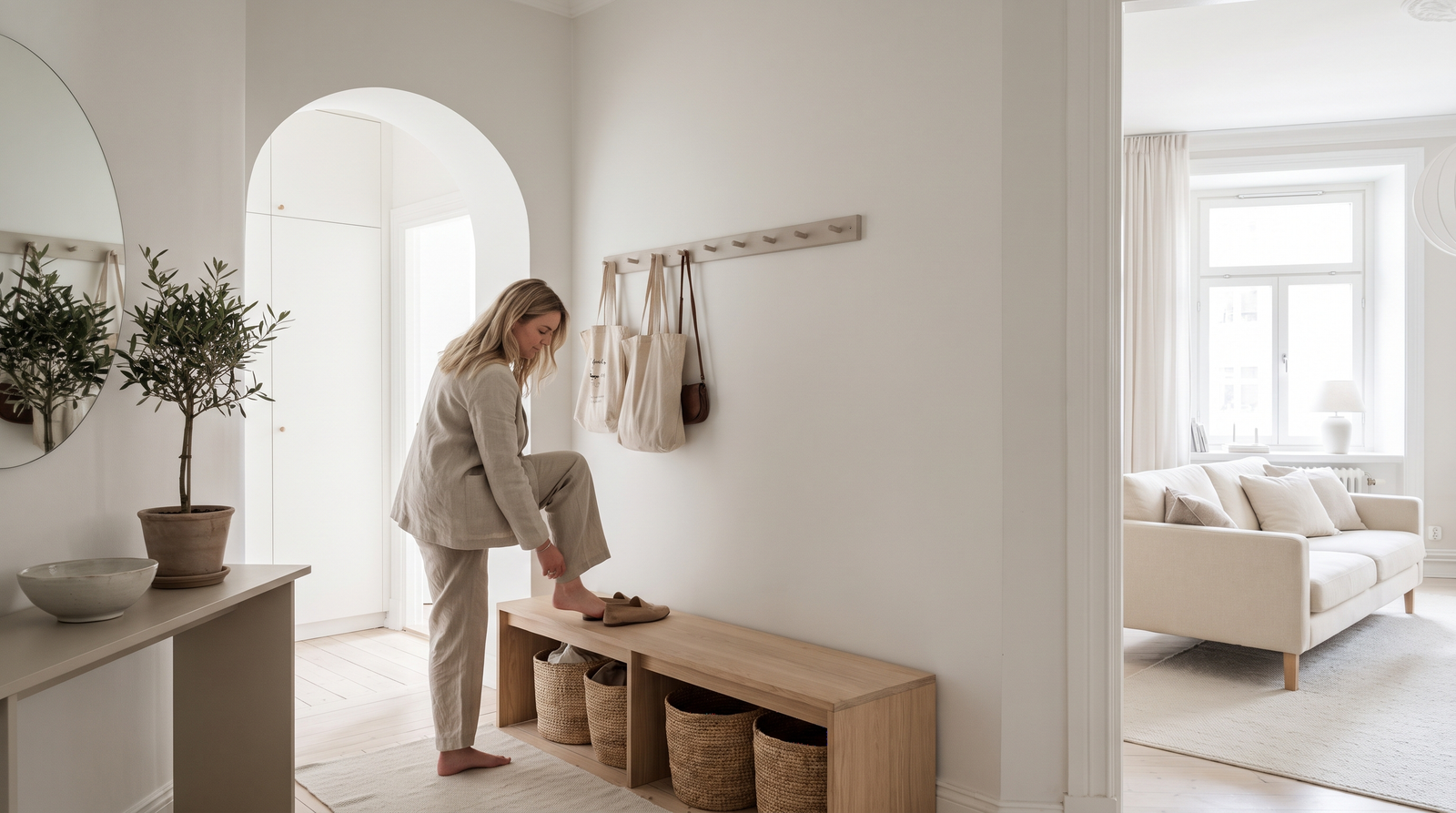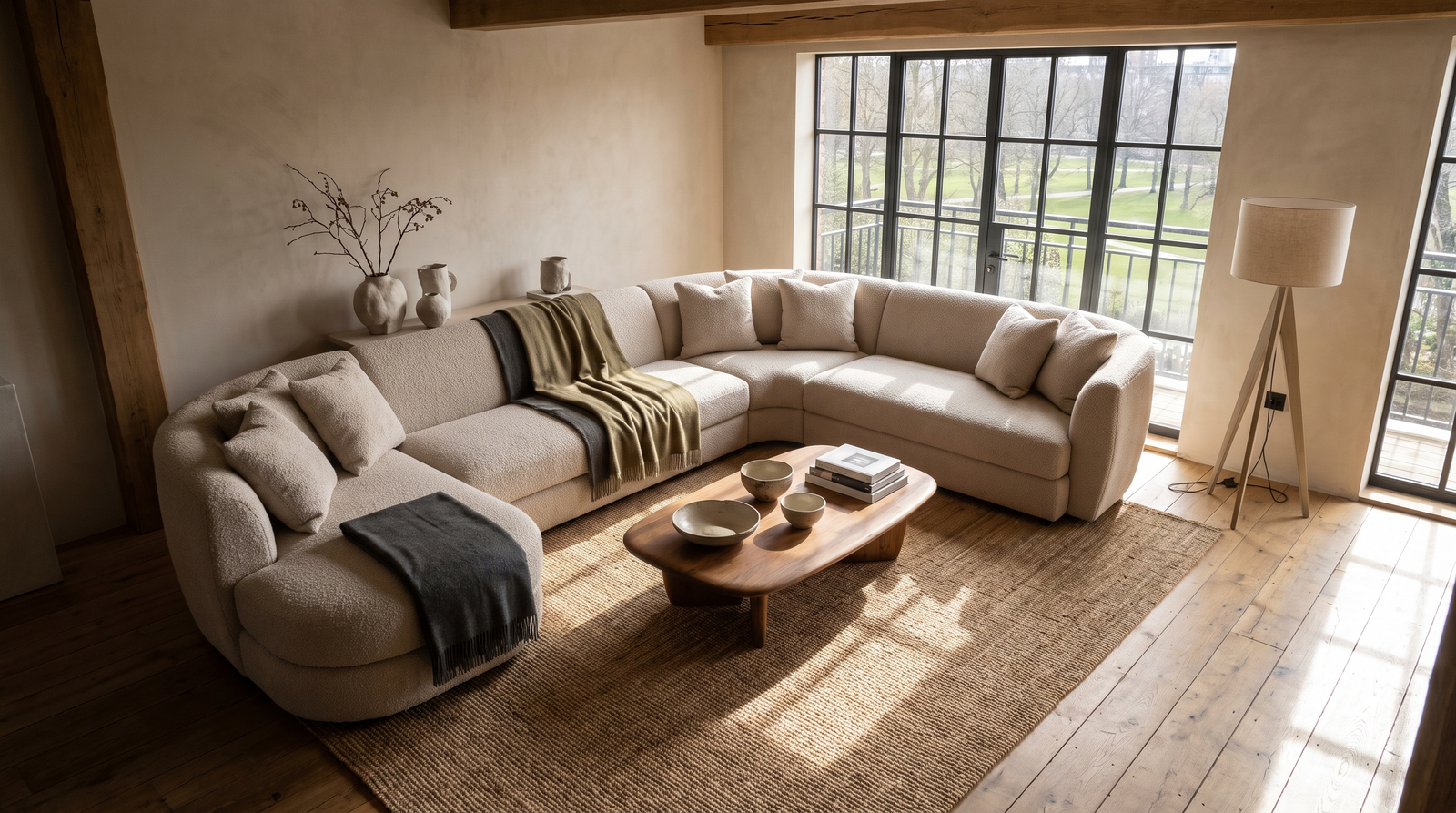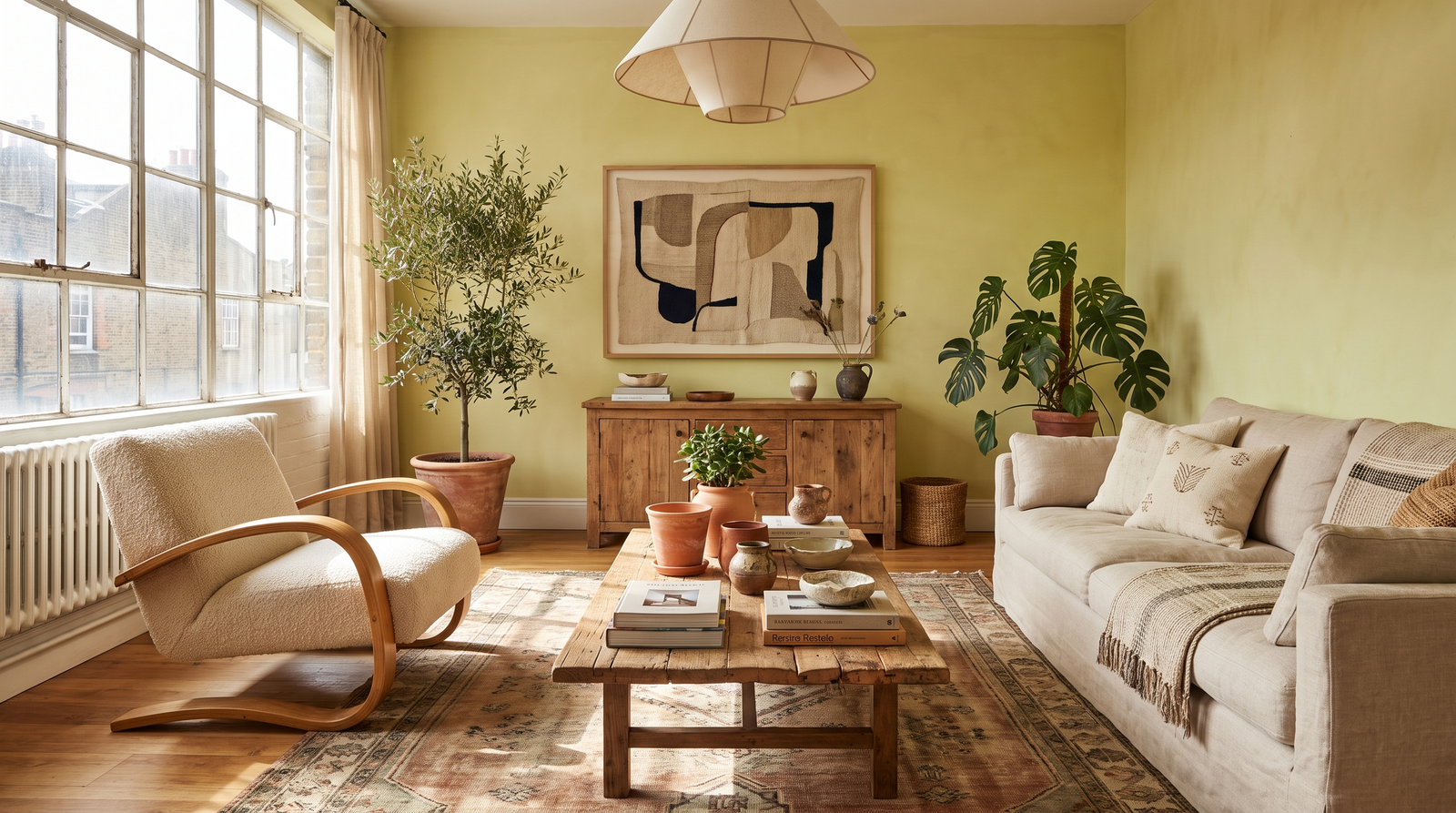
This guide explores how to create a Nordic boho living room that feels warm and personal without falling into the overly busy look traditionally associated with bohemian interiors. The formula is simple: start with a calm neutral foundation, layer in natural textures and earthy color, add plants and vintage character, then edit ruthlessly so the room still feels distinctly Scandinavian.
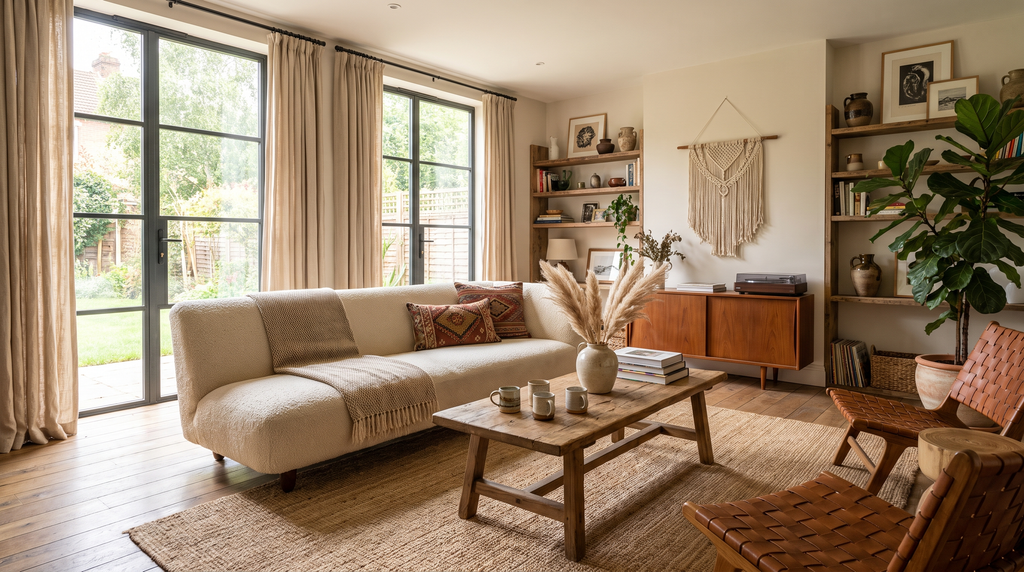
There’s something incredibly inviting about a Nordic boho living room. It feels relaxed without looking sloppy, cozy without becoming cluttered, and personal without looking like every inch of the room has been decorated. That balance is the secret.
Instead of traditional boho interiors packed with colorful textiles, dozens of accessories, and layers upon layers of patterns, Nordic boho takes a quieter approach. Think warm white walls, oat-colored upholstery, light wood, linen curtains, a vintage-inspired rug, leafy plants, handcrafted ceramics, and just enough earthy color to keep everything from feeling cold.
The result is a room that feels collected over time rather than purchased in one afternoon and the good news? You don’t need a huge budget or a complete renovation to get the look. A few thoughtful changes can completely shift the atmosphere of your living room. Here are 17 Scandinavian boho living room ideas to try.
All products are personally selected by us. If you buy something, we may earn an affiliate commission.
TABLE OF CONTENTS
Table of Contents
1. Start With a Warm-Neutral Foundation
The easiest way to establish Nordic boho style is to begin with a quiet color palette. Instead of stark white, choose warmer shades such as ivory, cream, oatmeal, mushroom, beige, or soft greige. These colors create the clean Scandinavian backdrop while giving the room more warmth.
Try a warm-white or oat-colored area rug underneath the seating area to soften the room immediately. From there, add small touches of clay, olive, muted terracotta, camel, or warm brown. The trick is restraint. You don’t need every earthy color in the room. Choose two or three supporting shades and repeat them naturally throughout the space.
2. Let Light Wood Do the Heavy Lifting
Light wood is practically a Nordic-boho essential.
Oak, ash, birch, and other pale woods instantly introduce warmth while maintaining the airy quality associated with Scandinavian interiors. Consider adding a light-oak coffee table, minimalist wooden side table, or wood-frame accent chair.
If your room already has plenty of pale wood, you can introduce contrast with one walnut piece. That little bit of darker wood can make the entire space feel richer.
Read more: 10 Affordable Scandinavian Home Décor: The Pieces Worth Buying First
3. Add One Vintage-Inspired Rug
A room can be beautifully minimalist and still feel cold if everything looks brand new. That’s where a vintage rug comes in. Choose a muted vintage-style rug featuring faded rust, beige, cream, olive, or tobacco tones. The worn-in appearance adds character without overwhelming the room.
For a truly Scandinavian feel, avoid extremely high-contrast patterns. A softly distressed rug with an imperfect, aged appearance works beautifully. Think collected, not coordinated.
4. Bring in Linen Everywhere You Can
Linen is one of the easiest ways to soften a Scandinavian room. Use it on windows, cushions, throws, or even the sofa itself.
Try natural linen curtains that gently filter sunlight rather than heavy drapes that block it completely. The slight wrinkles in linen are part of the charm. You can also layer linen throw pillows and a washed-linen blanket over your sofa. The texture does the decorating for you.
5. Introduce Rattan Without Turning the Room Into a Beach House
Rattan and cane work beautifully with Scandinavian furniture, but moderation matters. Rather than filling the room with wicker furniture, choose one or two intentional pieces.
A cane-front cabinet, rattan accent chair, or woven pendant light can provide exactly the right amount of organic texture. Pair it with clean-lined Scandinavian furniture so the room feels balanced. One beautiful woven piece often has more impact than five smaller ones.
6. Layer Wool for Instant Warmth
Scandinavian interiors are masters of tactile comfort. Bring in wool through a chunky wool throw, wool-blend rug, or textured boucle accent pillow. These materials make a neutral room feel inviting without requiring bright colors.
For a particularly polished look, combine different textures in similar tones. For example, pair an oat-colored linen sofa with a cream wool throw and a beige textured cushion. Same color family. Completely different textures. That’s what makes the room interesting.
7. Use Olive and Muted Terracotta as Accent Colors
If your room feels too beige, don’t immediately reach for bright colors. Instead, introduce muted earthy shades.
Olive green works beautifully with cream, walnut, and natural wood. Muted terracotta adds warmth without overpowering the Scandinavian foundation. Try olive green throw pillows, terracotta ceramic vases, or a rust-colored textured throw. The goal isn’t to create a colorful room. It’s to give the neutral palette somewhere to go.
8. Make Plants Part of the Design
Plants are practically made for Scandinavian boho interiors. They add color, movement, texture, and life without making the room feel visually heavy. A large olive tree, fiddle-leaf fig, or rubber plant can fill an empty corner beautifully.
For smaller spaces, use simple ceramic planters on shelves or side tables. Don’t turn the living room into a jungle, though. Two or three thoughtfully positioned plants can look far more sophisticated than a collection of twenty tiny pots.
9. Choose Handmade-Looking Ceramics
This is where the “boho” side of the aesthetic becomes more apparent. Look for slightly imperfect shapes, organic edges, matte finishes, and earthy glazes.
A handcrafted ceramic vase, stoneware bowl, or sculptural pottery piece can make a coffee table or bookshelf feel instantly more personal. The key is to display a few beautiful objects rather than filling every available surface. Negative space is part of the design.
10. Create a Soft Lighting Plan
Overhead lighting alone can make even the most beautiful living room feel harsh. Instead, create layers of light. Start with a warm floor lamp beside the sofa. Add a small ceramic table lamp to a console or side table, then use a woven pendant or ceiling fixture for general illumination.
Choose warm bulbs, ideally around 2700K. At night, several small pools of warm light will make the room feel considerably more intimate than one bright ceiling fixture.
Read more: 10 Affordable IKEA Finds for a Warm Scandinavian Home This Fall
11. Mix Light Wood with One Darker Wood Tone
Scandinavian design often favors pale wood, but Nordic boho interiors benefit from contrast. Try combining light oak with walnut.
For example, imagine a light-oak coffee table paired with a walnut side table or a walnut-framed vintage mirror. The darker tone anchors the room and prevents a neutral palette from becoming flat.You don’t need much.One darker wood element can be enough.
12. Add a Sculptural Accent Chair
A Scandinavian boho living room doesn’t have to consist entirely of a sofa and coffee table. Introduce an interesting chair with a beautiful silhouette. A bouclé lounge chair, cane accent chair, or natural linen armchair can create a secondary focal point.
Look for rounded shapes rather than overly ornate details. The Scandinavian influence comes from the simplicity of the form, while the boho influence comes through the natural material and relaxed texture.
13. Style Your Coffee Table Like a Collection, Not a Display Shelf
Coffee-table styling is where many people accidentally create visual clutter. Instead of stacking ten decorative objects together, try three or four.
For example:
- A large neutral coffee-table book
- A handmade ceramic bowl
- A small stone or wood decorative object
- A simple bud vase with greenery
Leave plenty of the tabletop visible.
That empty space is important. It makes the objects you do choose look more intentional.
14. Use a Large Mirror to Reflect Light
A mirror can make a Scandinavian-inspired living room feel brighter and more spacious. Choose something with a natural wood frame, aged finish, or simple organic shape.
Place it opposite a window when possible so it reflects natural light throughout the room. Avoid overly ornate frames. A simple design will keep the room feeling modern.
15. Mix Vintage Pieces with Modern Basics
This is one of the best ways to make your home look genuinely collected. Pair a streamlined modern sofa with a vintage coffee table. Put a contemporary linen lounge chair beside an antique-inspired cabinet.
Display a vintage-looking ceramic alongside a modern lamp. The contrast keeps the room from looking like a showroom and because Scandinavian design is already rooted in functionality, even a quirky vintage piece can work beautifully when the rest of the room remains edited.
16. Create a Cozy Reading Corner
If you have an unused corner, turn it into a small retreat. All you really need is a comfortable linen or boucle chair, a small wooden side table, a warm floor lamp, and a soft wool throw. Add one plant nearby.
That’s it. The area doesn’t need to be filled with accessories. The purpose of a Scandinavian-inspired home is to create spaces that encourage you to slow down and actually live in them.
17. Edit Until the Room Can Breathe
This might be the most important Scandinavian boho rule of all. After decorating, remove something. Then look around again. Scandinavian style depends heavily on visual breathing room. If every wall, shelf, table, and corner has something sitting on it, the room starts drifting away from Nordic minimalism and toward traditional maximalist boho.
Leave some shelves empty. Allow the floor to remain visible. Don’t fill every corner with furniture. Give your favorite objects room to stand on their own. A collected home isn’t necessarily a home with more things. It’s a home where the things you own have meaning.
The Scandinavian Boho Formula
If you’re starting from scratch, keep the formula surprisingly simple:
Warm neutral base + natural materials + earthy accents + vintage character + greenery + soft lighting + negative space.
Start with your largest pieces first. A cream or oatmeal sofa provides the foundation. Add a muted vintage rug, then introduce light-wood furniture. Layer in linen textiles, wool throws, and one or two rattan or cane pieces. Next, bring in plants.
Finally, add personality through handmade ceramics, vintage finds, books, art, and objects you’ve collected over time. Don’t rush this final stage. The most beautiful rooms rarely look as though everything was purchased together.
How to Keep Nordic Boho From Becoming Cluttered
There’s a fine line between warm and crowded.
If you’re worried about crossing it, follow a few simple rules:
- Choose quality over quantity.
- Repeat colors instead of introducing dozens of new ones.
- Mix textures rather than piling on accessories.
- Give furniture room to breathe.
- Keep surfaces partially empty.
- Use plants strategically.
- Let one vintage or handmade object become the focal point.
- Avoid matching every piece of furniture.
- Remove anything that doesn’t contribute to the room.
When in doubt, edit.
That’s often the difference between a room that feels thoughtfully layered and one that simply feels full.
The Final Look: Warm, Personal, and Effortless
The beauty of a Scandinavian boho living room is that it doesn’t have to look perfect. In fact, a little imperfection is part of its appeal. A wrinkled linen curtain. A slightly irregular ceramic vase. A vintage rug with faded colors. A wooden table with visible grain. A plant that isn’t perfectly symmetrical. These details make a home feel human. The Scandinavian influence gives the space structure and restraint. The bohemian influence gives it soul.
Put the two together, and you get a living room that’s calm but not sterile, cozy but not cluttered, and stylish without looking overly designed. Most importantly, don’t feel pressured to buy everything at once.Start with the foundation, layer in natural materials, add warmth through lighting and textiles, and let your personality slowly enter the room. That’s the real secret to a warm, collected home: decorate with intention, then leave enough space for life to happen.